

We clean your building from the air.
Façades, solar arrays, industrial roofs and vertical structures — cleaned by drone across Accra and Tema. No scaffold. No rope teams. No shutdown.
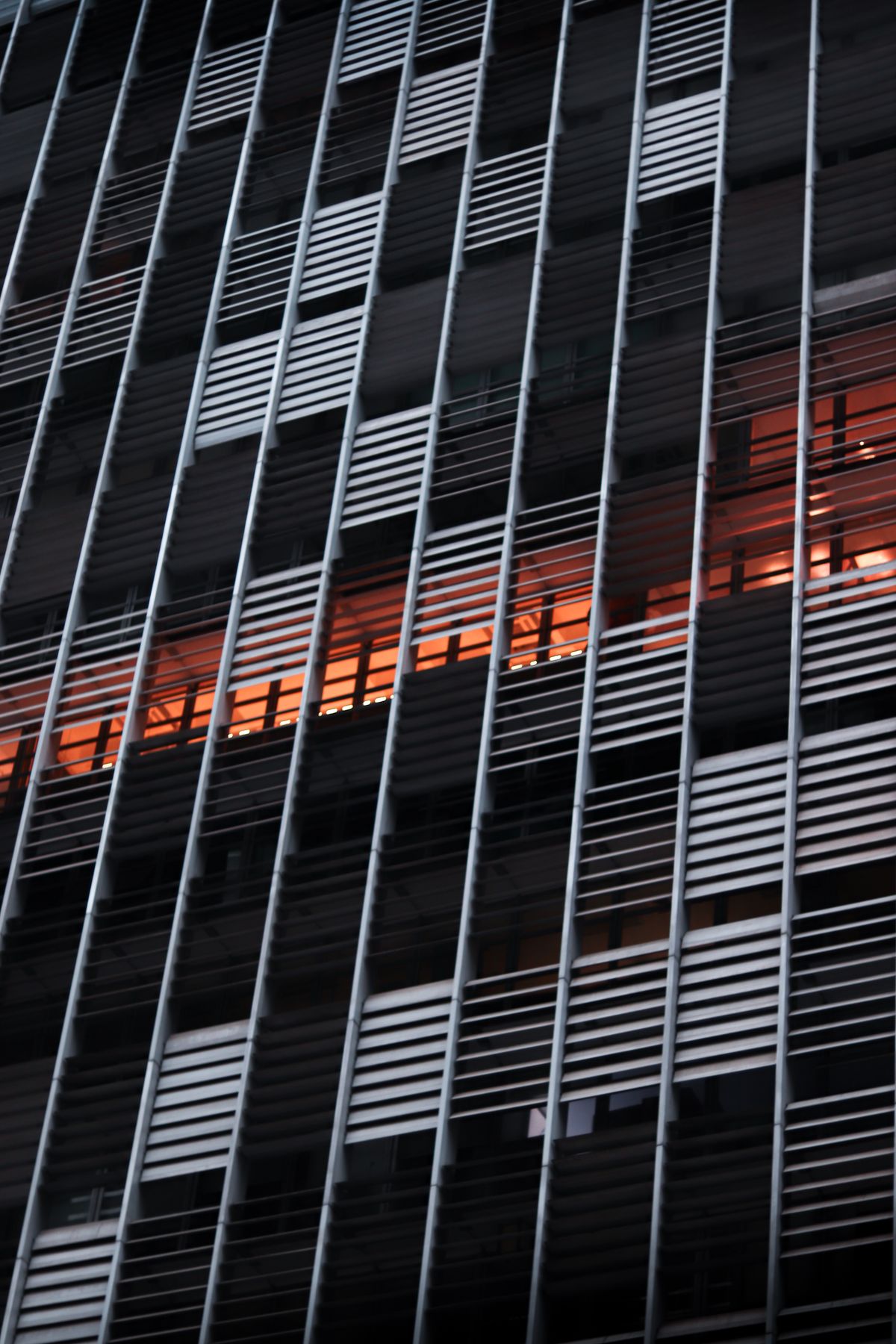
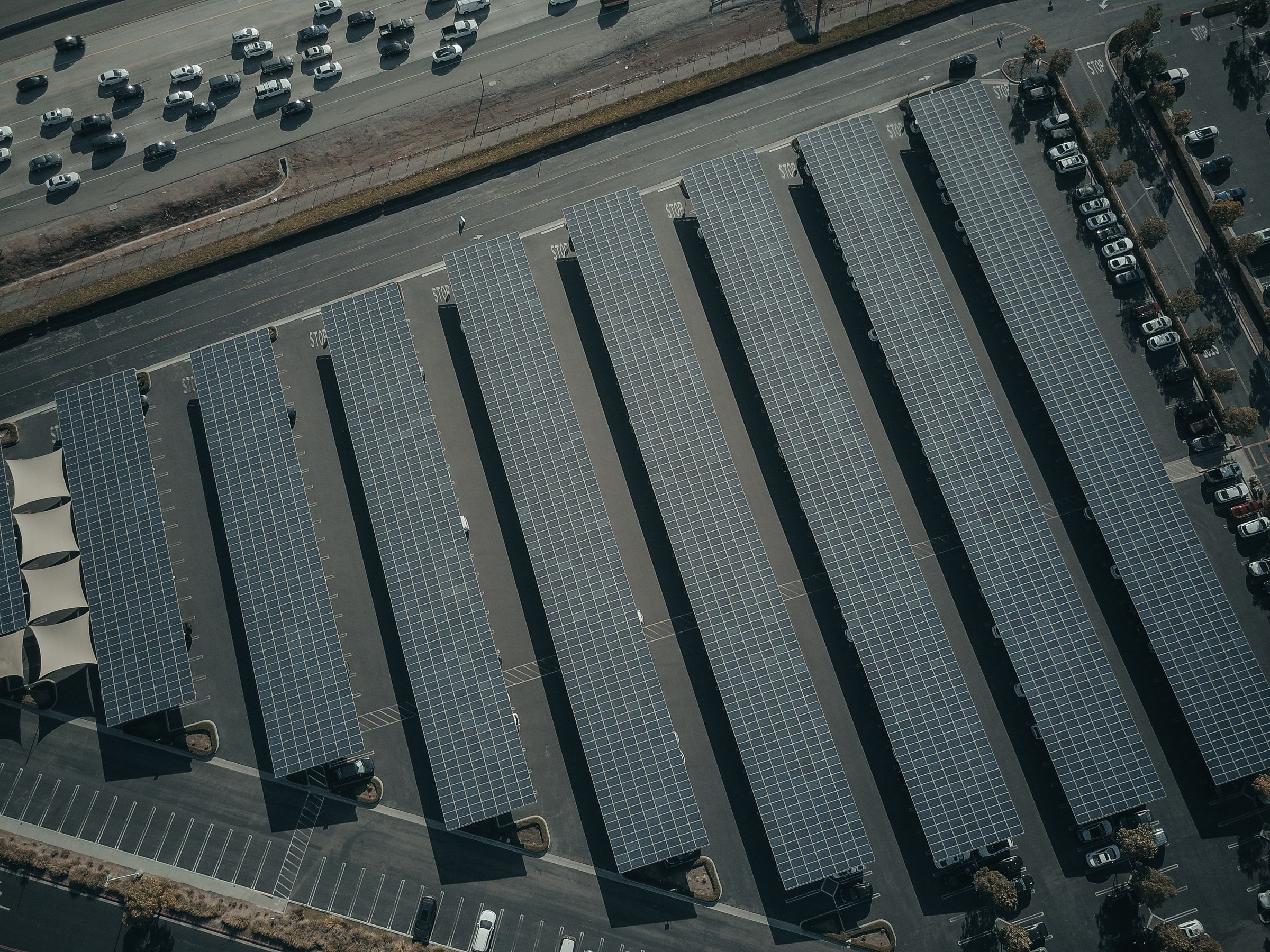
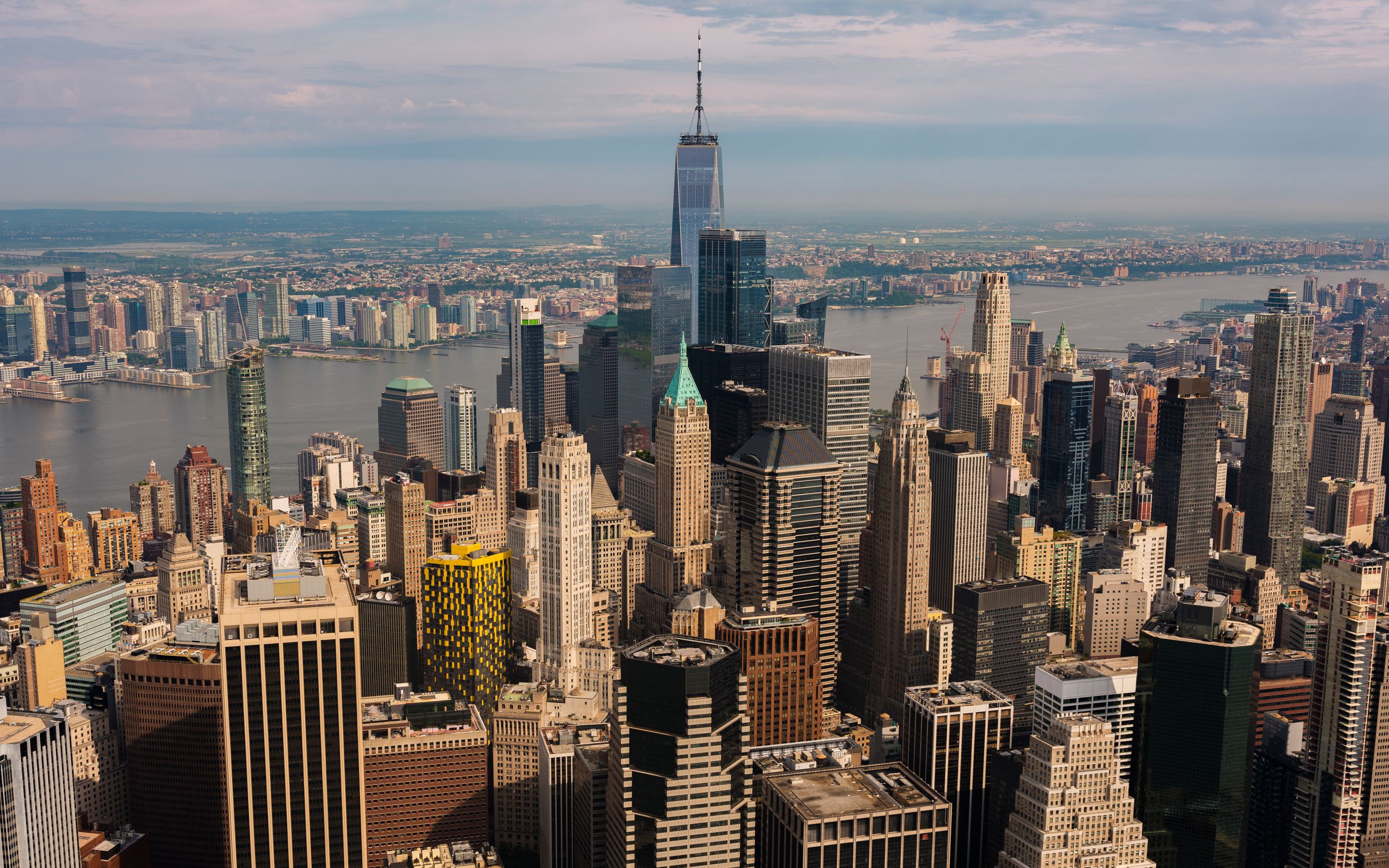

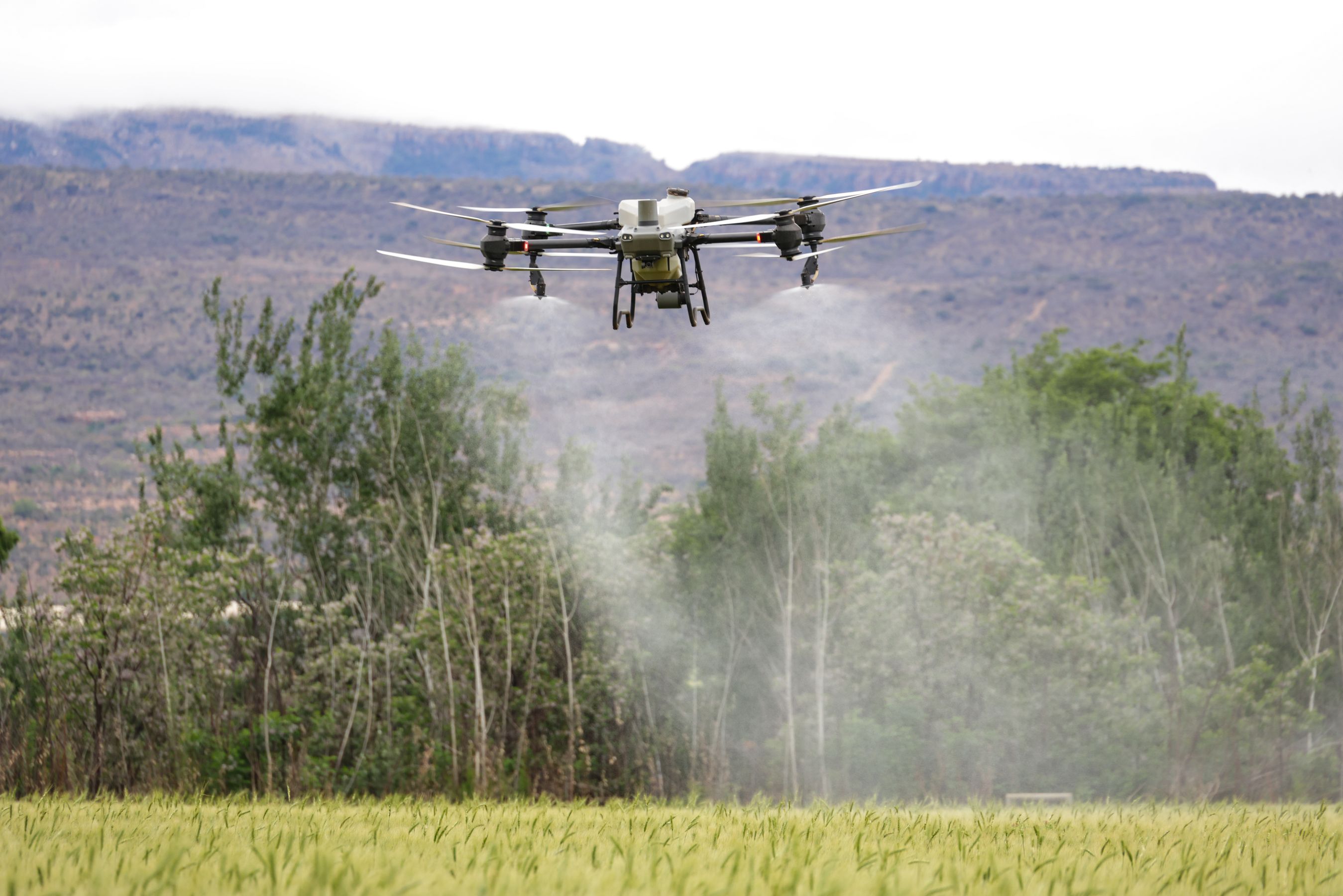
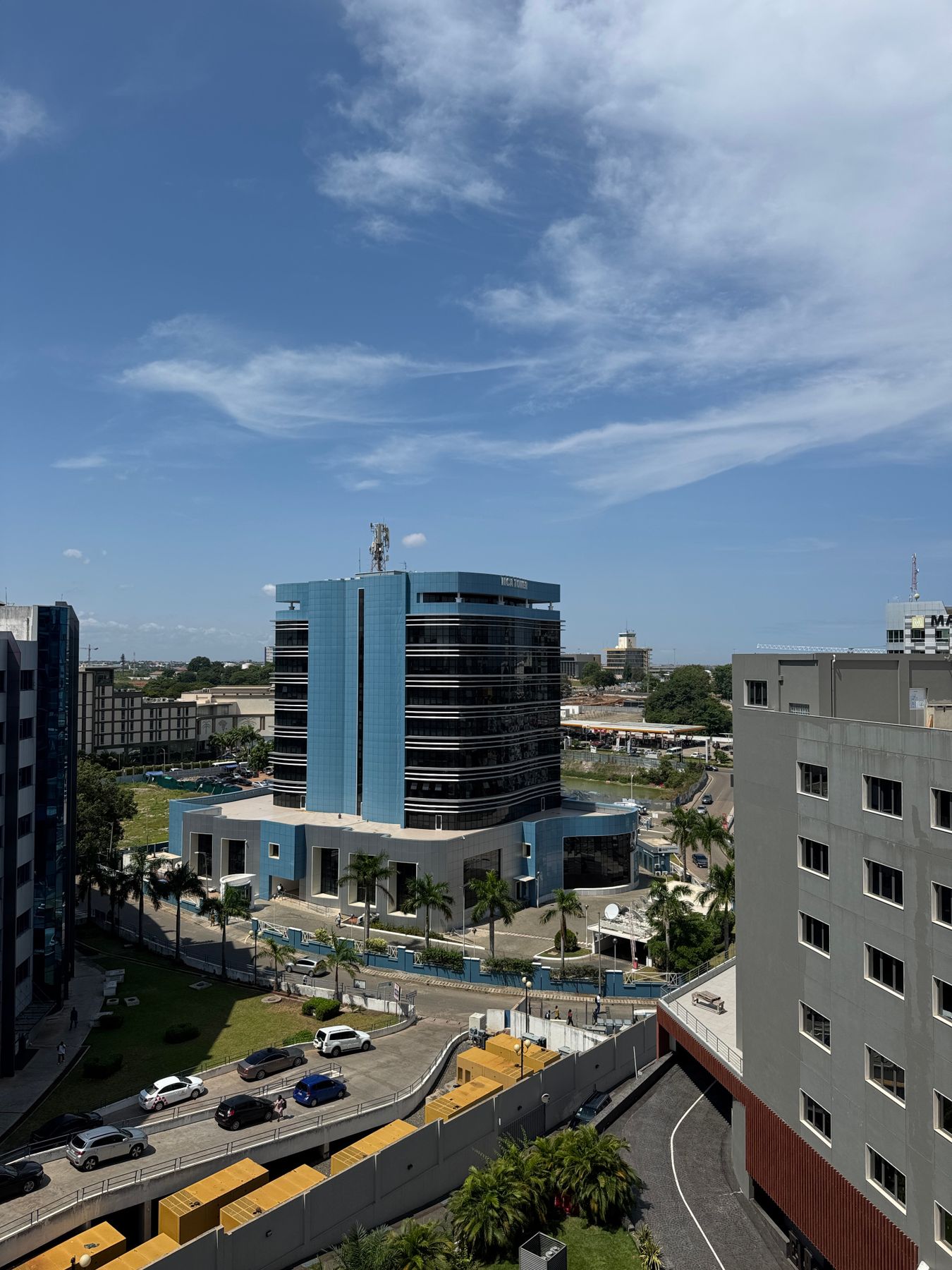
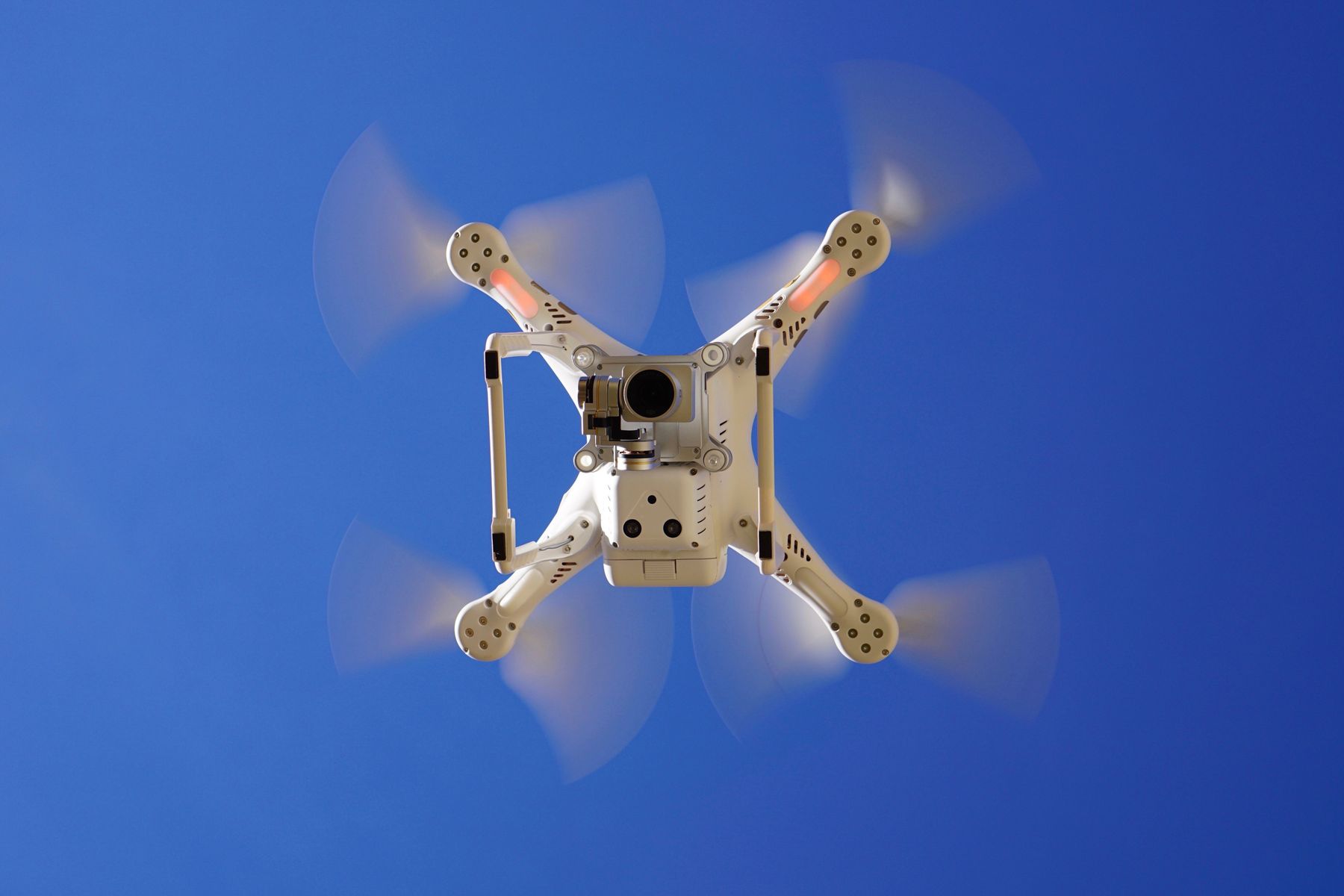
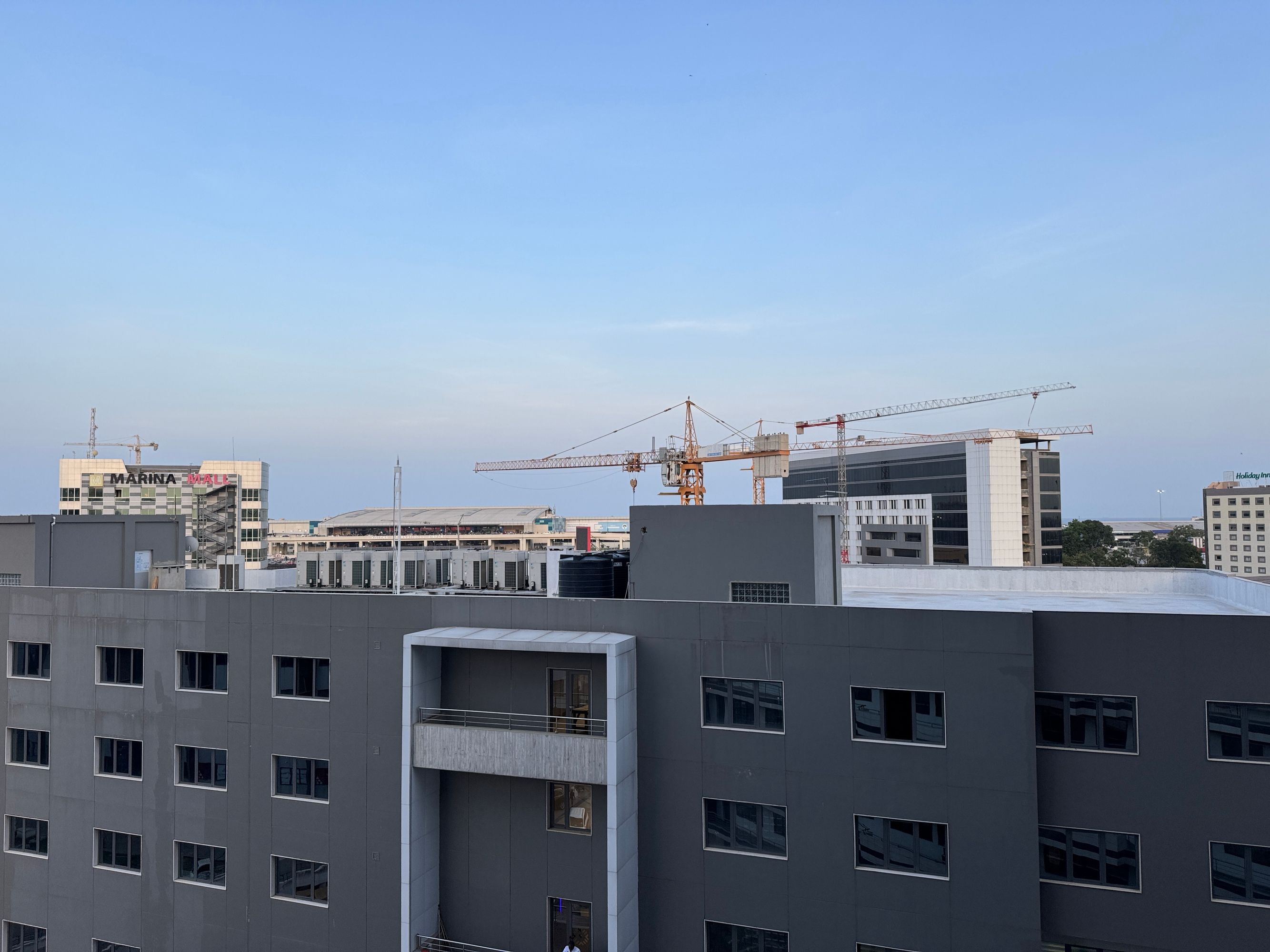
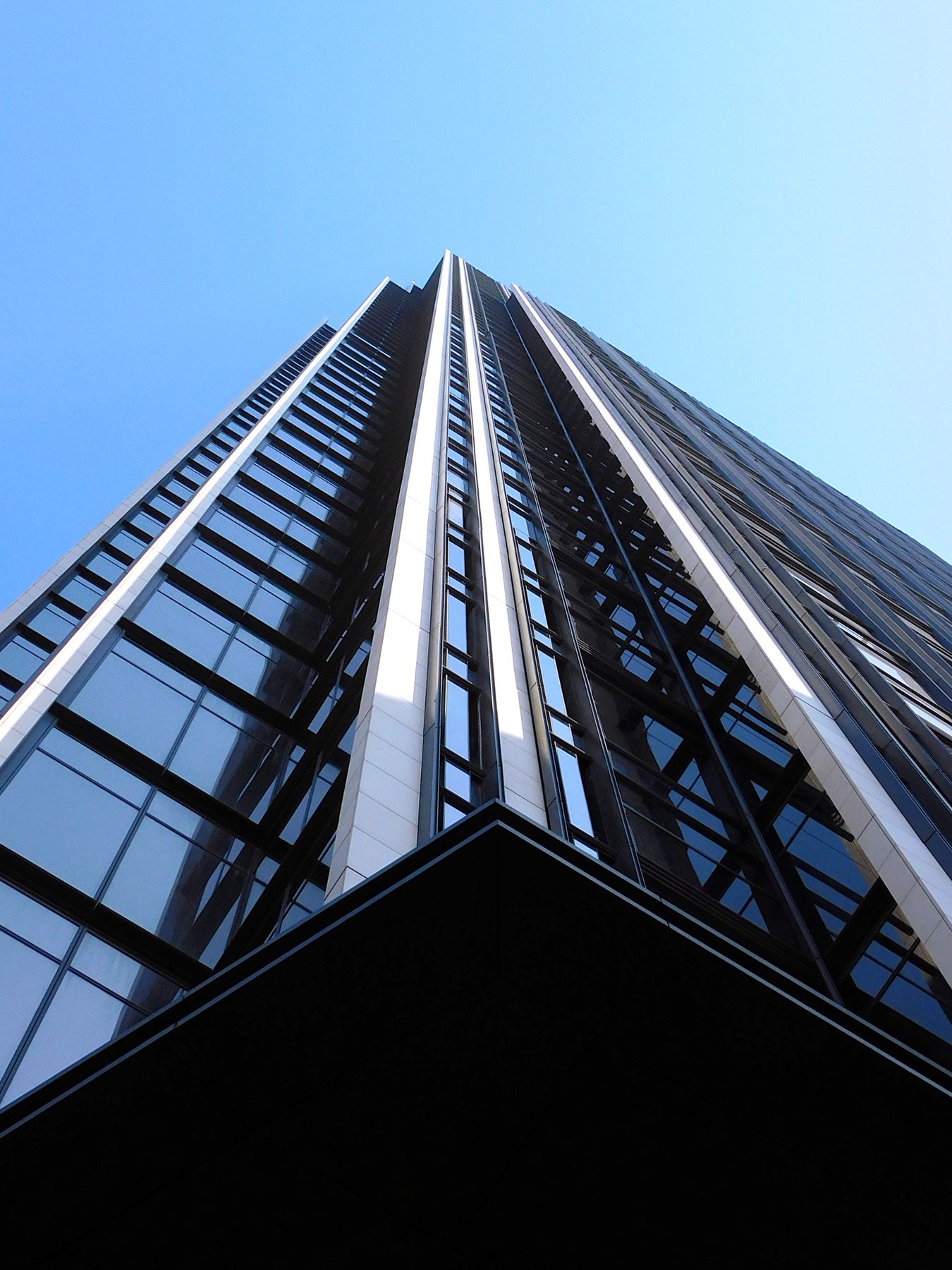
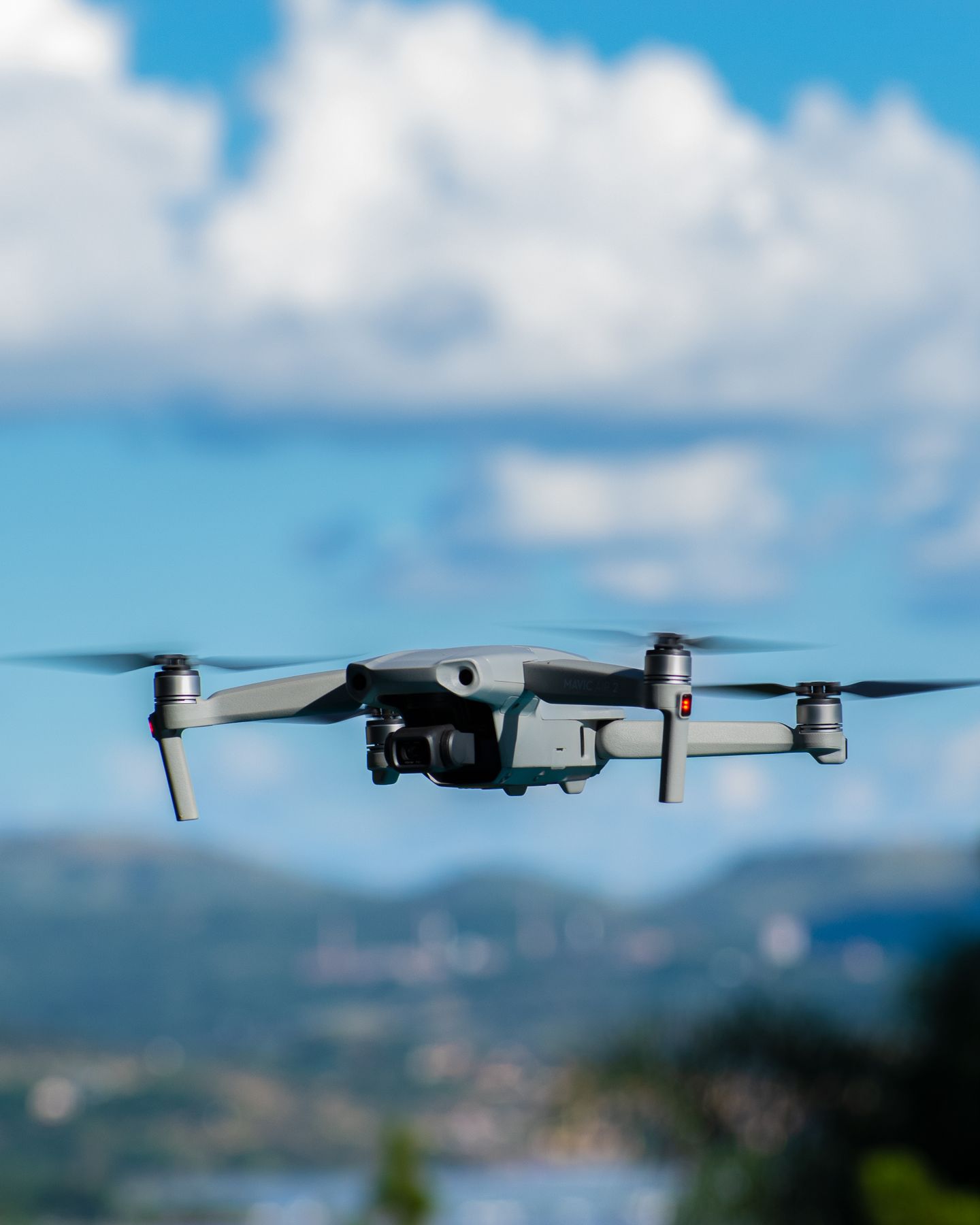
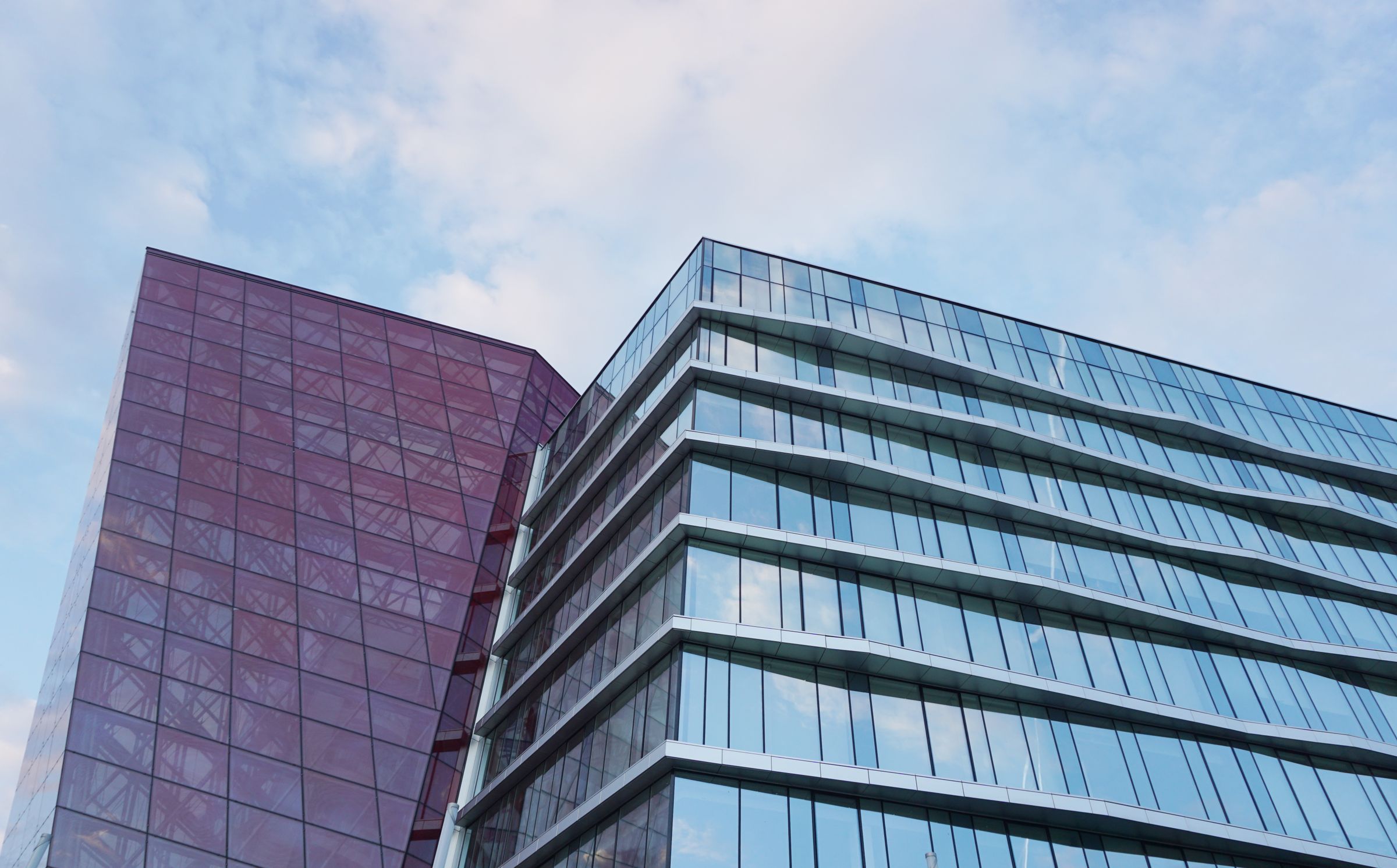
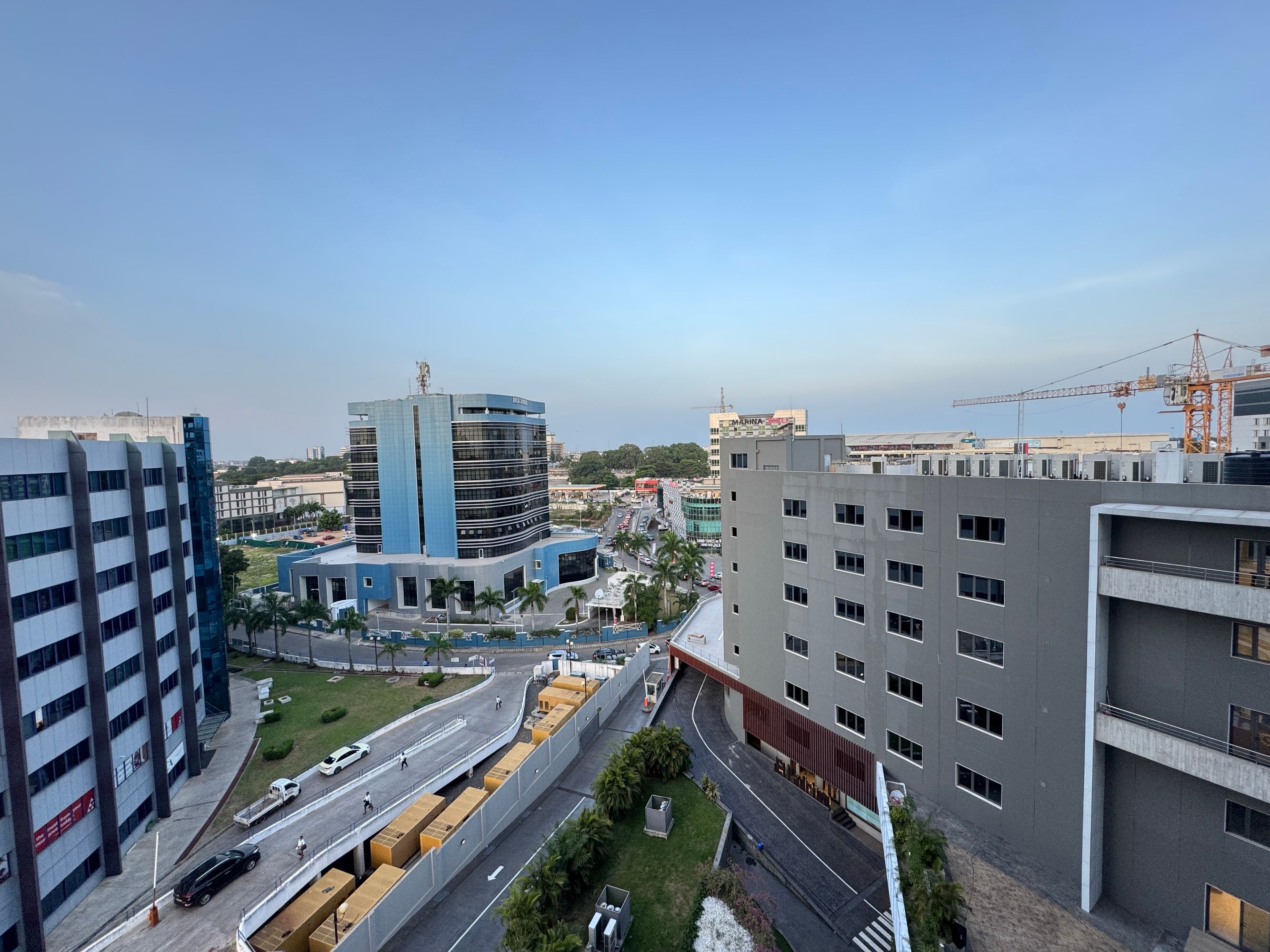
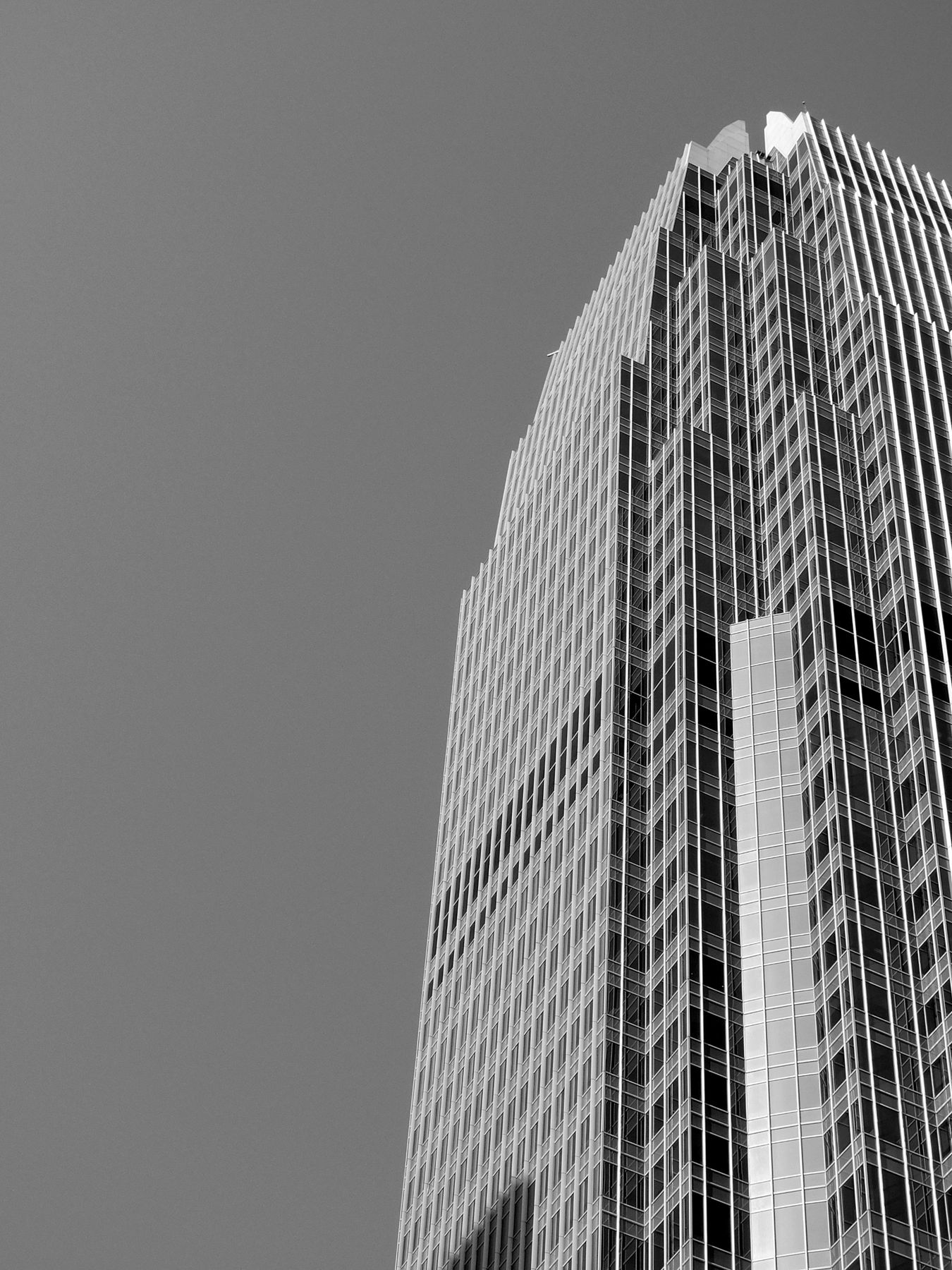
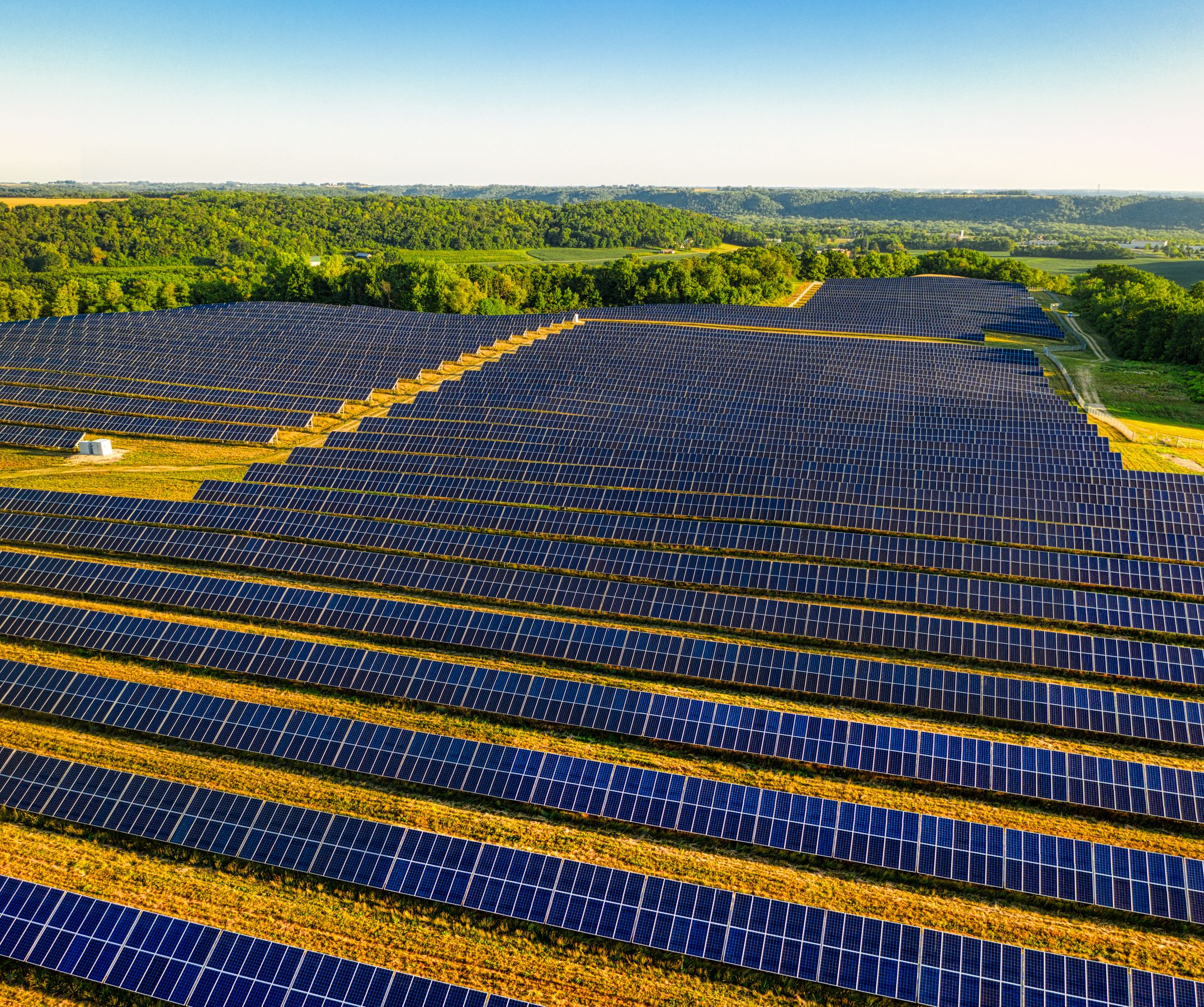
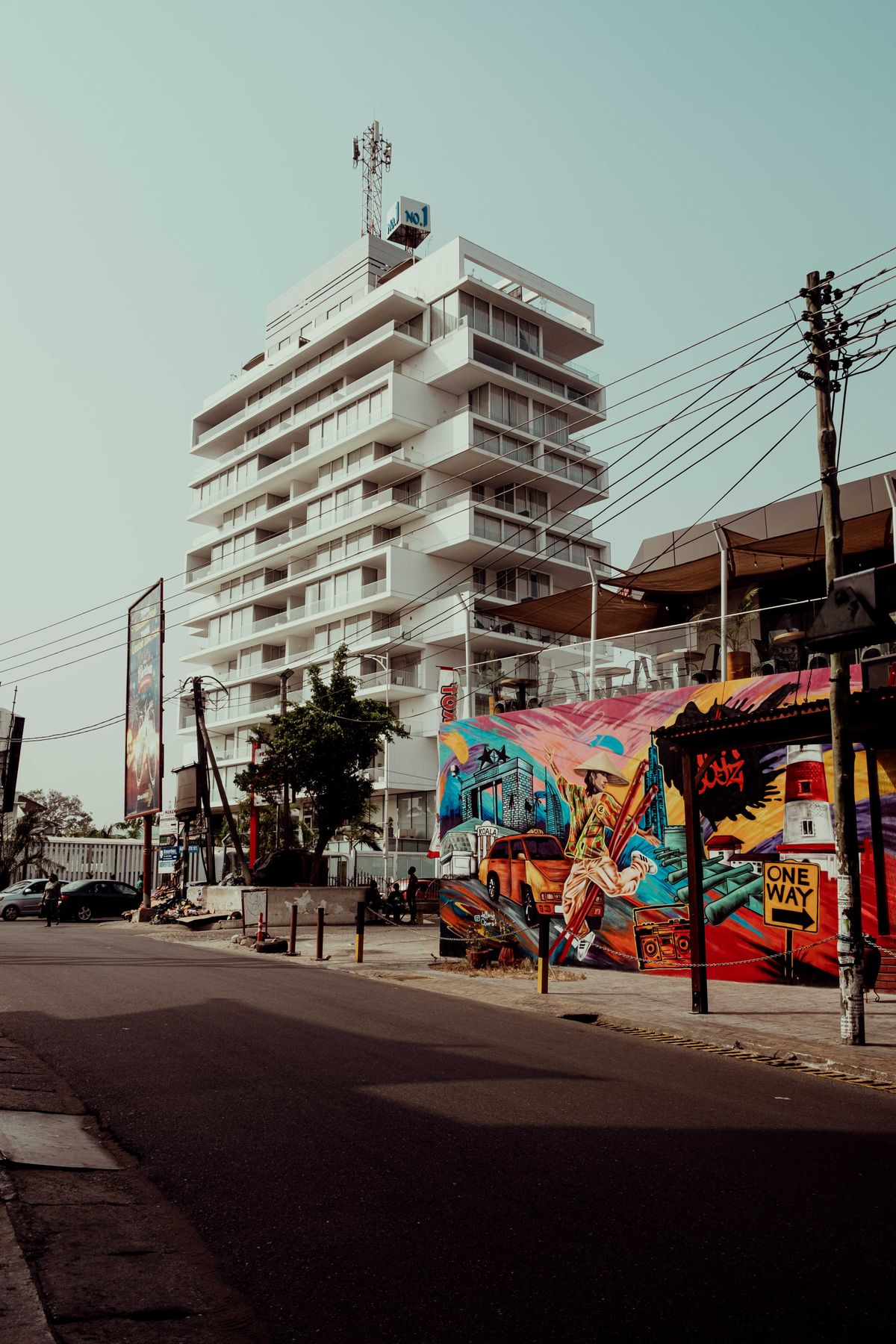
Imagery is representative of the work and the assets we operate on. It is not a record of specific SkyClean jobs.
Six services, one method: nobody goes over the edge.
Façade and glass cleaning
Towers, hotels, hospitals and headquarters — cleaned from the air. No cradle, no rope team, no scaffold licence.
Service detail S-02Solar array cleaning
Utility farms, commercial rooftops and mini-grids. Dust on a panel is money leaving the meter.
Service detail S-03Roof and cladding cleaning
Warehouses, plants and free-zone sites cleaned from above while the floor below keeps running.
Service detail S-04Industrial structure cleaning
Tanks, silos, stacks and masts — the assets that make height permits expensive.
Service detail S-05Aerial inspection and condition survey
High-resolution and thermal survey. A dated condition record, not a folder of photos.
Service detail S-06Planned maintenance programmes
Annual cycles with agreed frequencies and reporting. Priced as a programme, not a panic.
Service detailThe whole method fits in the back of a van
No scaffold lorries. No crew returning every morning for three weeks. A pilot, a ground team, a water train, an exclusion zone — then the elevation is clean and the site looks untouched.
On a tall building, you are not paying for cleaning. You are paying for access.
Scaffold erection and dismantling. Cradle certification. Anchor testing. Rope supervision and standby rescue. That layer carries most of the cost, nearly all of the programme time, and effectively all of the risk.
Flying removes the layer instead of managing it. The cleaning is unchanged. The exposure disappears, because nobody is at height.
What changes when the job is flown
Structural facts about the method, not performance claims. Job figures are recorded per site and issued with your report.
Four stages, in order, every time
Site assessment
We walk the site, measure the elevation or array, and confirm what is actually achievable. Free, and it commits you to nothing.
Flight plan and permissions
The pilot sets the path, exclusion zone and abort points. Regulatory and site permissions clear before a date is confirmed.
Mobilise and fly
Ground crew set the exclusion zone and water treatment. The pilot flies the planned path with a spotter. Progress is logged as it happens.
Report and sign-off
Before and after imagery, the flight log, any condition findings, and a sign-off sheet for your asset file.
Book a site assessment
Tell us what the asset is and where it stands. We come back within one business day to arrange an assessment, and the proposal that follows is free.
Built around one decision: take the person off the building.
Ghana’s first company dedicated to drone-powered high-access exterior cleaning. We work on the buildings, arrays and structures that are hard, costly or dangerous to reach.
Accra grew upwards faster than its maintenance market did
Accra and Tema have filled with glass towers, hospitals, hotels and industrial estates. The buildings arrived. A safe, affordable way to maintain their exteriors did not.
The default is still scaffold or rope: slow, expensive because of the access rather than the work, and dependent on putting someone over a parapet above a public street. So exteriors get cleaned late, rarely, or only before a visit.
We exist to change that. Flying turns a disruptive project into a scheduled task, and the most dangerous job on site into one nobody has to do.
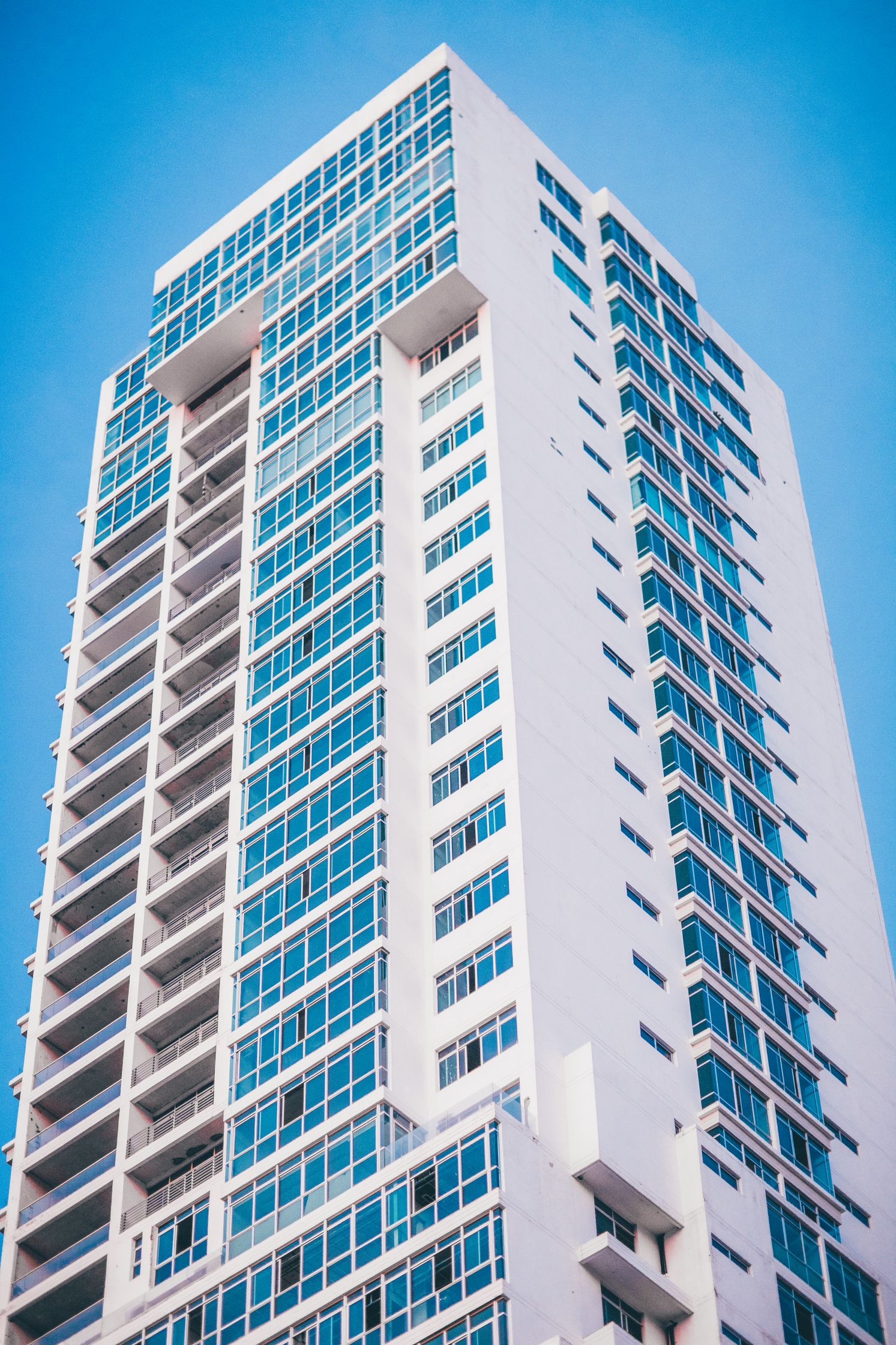
Accra, Airport City. Glass stock of this age carries salt loading, exhaust film and Harmattan dust in roughly equal measure.
Four commitments we do not trade away
We scope before we sell
No proposal is issued without a site assessment. If flying is the wrong answer for your asset, we will tell you and point you at the right one.
Everything is written down
Method statement, risk assessment, permissions, flight log, water volume. If it happened on your site, there is a record of it.
Compliance is not optional
We do not fly commercially without the permissions the site requires. There is no version of this business where that is negotiable.
Programmes, not call-outs
Most of our work is contracted as a cycle. It costs the client less over time and it means we know the building.
Accra grew upwards faster than its maintenance market did
The towers, hospitals, hotels and industrial estates arrived. The safe, affordable way to maintain their exteriors did not. That gap is the entire reason this company exists.
Where we operate
Greater Accra and Tema are our core coverage, where we mobilise quickly and hold programme dates. We travel nationwide for programmes and larger single assets, priced and agreed before you commit.
- Core coverage
- Greater Accra & Tema
- Nationwide
- By programme arrangement
- Assessment response
- 1 business day
- Typical mobilisation
- Agreed at scoping
Asset owners with something to protect
Property groups, hotels, hospitals, banks, solar producers and EPCs, manufacturers, logistics and free-zone operators, telecoms, universities and public institutions.
The market we were built for
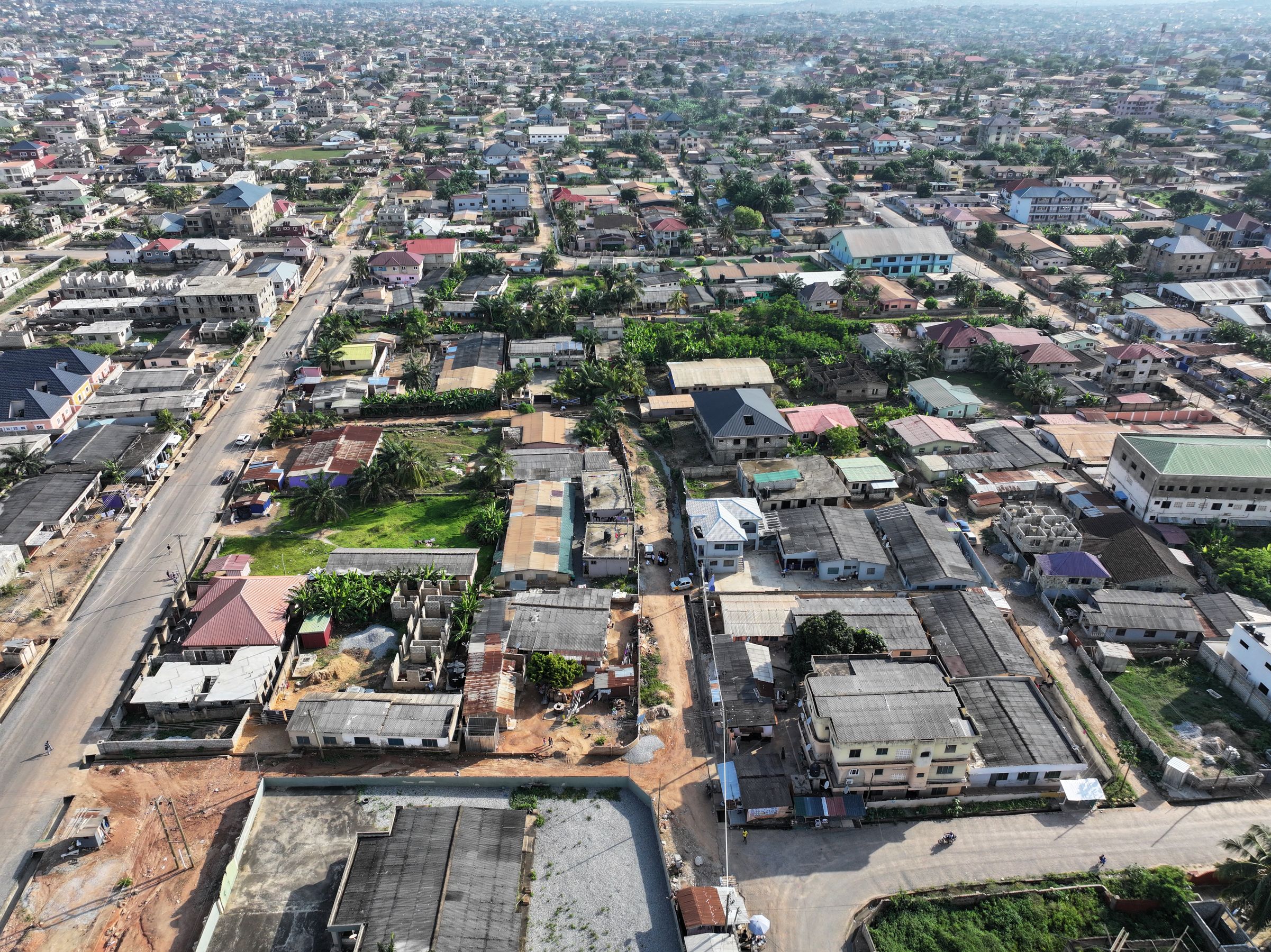
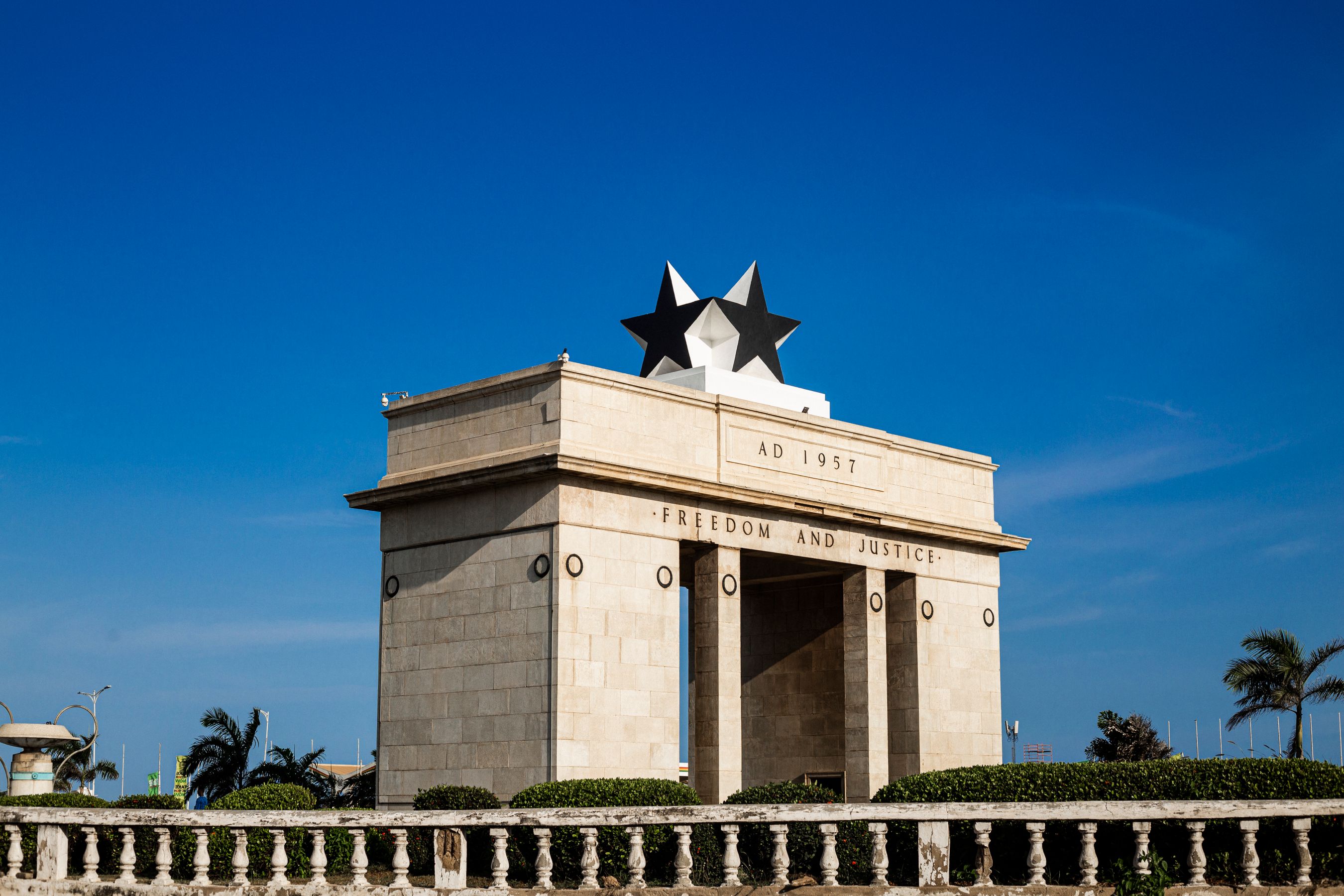
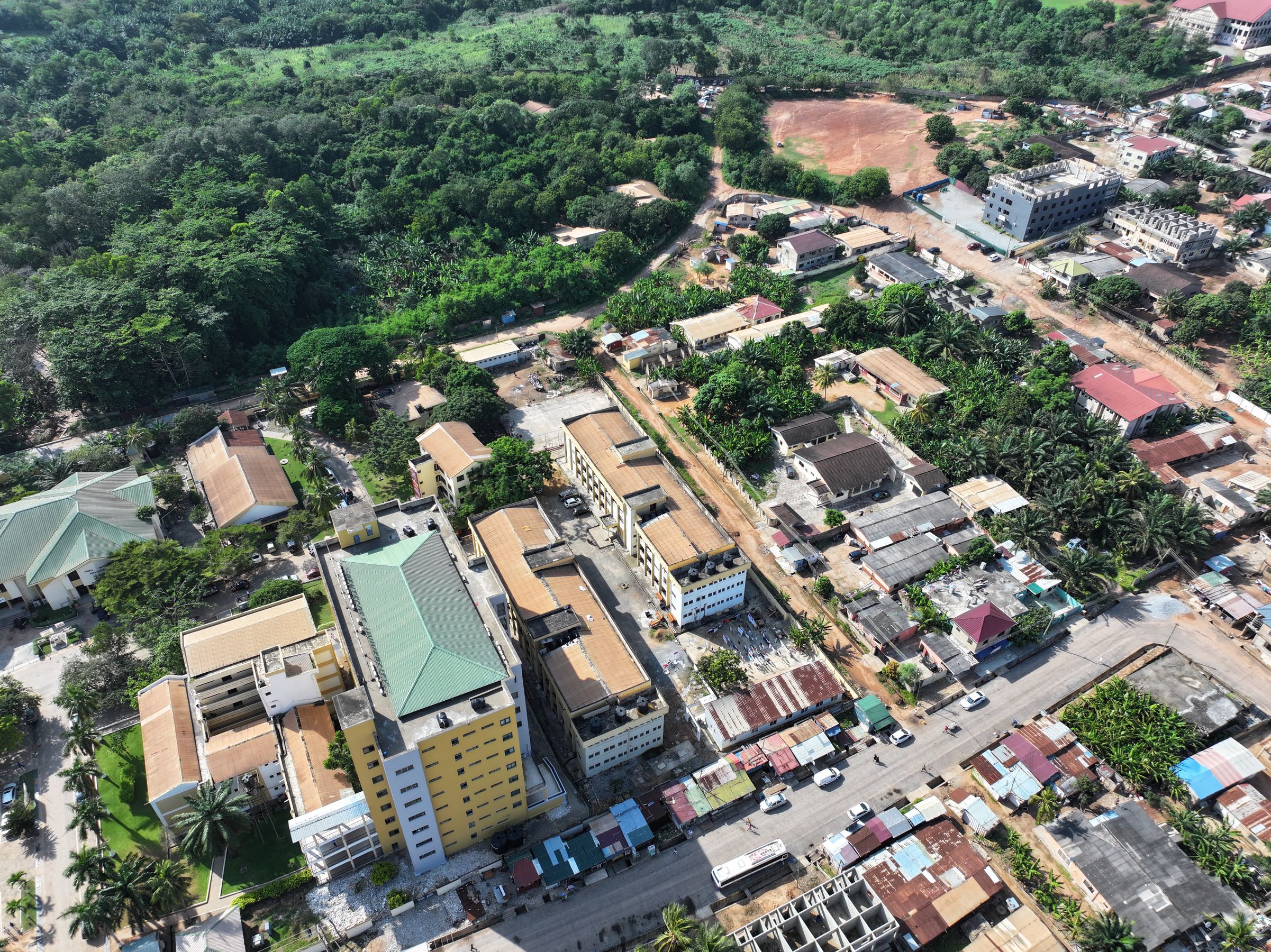
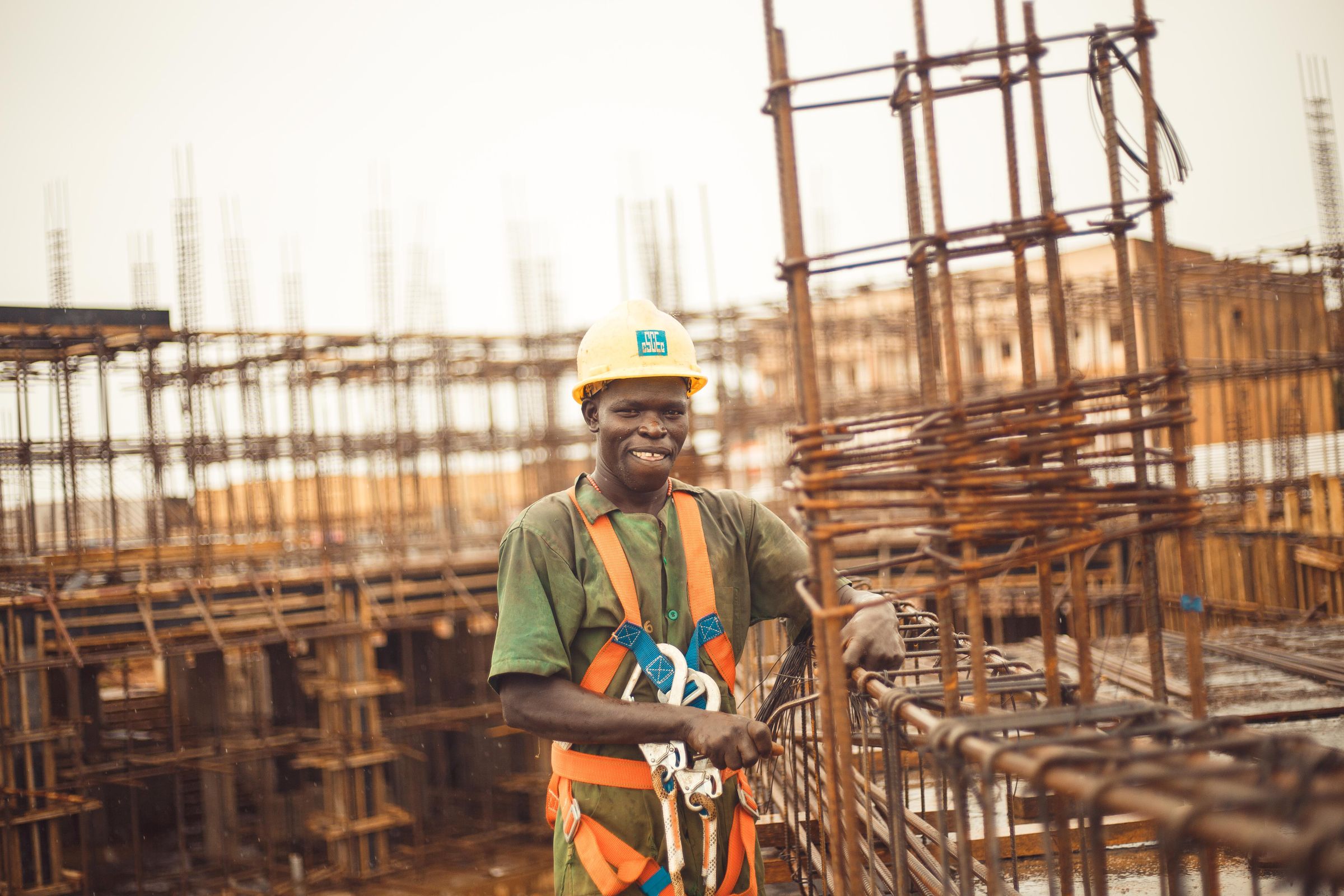
Imagery is representative of the assets and environments we work in.
Book a site assessment
Tell us what the asset is and where it stands. We come back within one business day to arrange an assessment, and the proposal that follows is free.
Everything we clean, we clean without putting anyone at height.
Six service lines, one method. Each is scoped from a site assessment, flown to a written plan, and closed out with imagery, a flight log and any findings we picked up.
Façade and glass cleaning
Towers, hotels, hospitals and headquarters — cleaned from the air. No cradle, no rope team, no scaffold licence.
Service detail S-02Solar array cleaning
Utility farms, commercial rooftops and mini-grids. Dust on a panel is money leaving the meter.
Service detail S-03Roof and cladding cleaning
Warehouses, plants and free-zone sites cleaned from above while the floor below keeps running.
Service detail S-04Industrial structure cleaning
Tanks, silos, stacks and masts — the assets that make height permits expensive.
Service detail S-05Aerial inspection and condition survey
High-resolution and thermal survey. A dated condition record, not a folder of photos.
Service detail S-06Planned maintenance programmes
Annual cycles with agreed frequencies and reporting. Priced as a programme, not a panic.
Service detailThe same aircraft that cleans the surface photographs it
Every flight is a survey whether you commissioned one or not. So the condition record comes back with the cleaning, not as a separate job six months later.
Where flying wins, and where it does not
We would rather lose a job than take one that belongs to a rope team.
| Task | Best method | Why |
|---|---|---|
| Routine façade and glass cleaning | Flown | Repetitive, high-area, no contact needed. Access is the entire cost driver. |
| Solar array cleaning | Flown | Non-contact protects coatings, and nobody walks the array or a fragile roof. |
| Large roof and cladding | Flown | Fragile sheeting and open edges make manual access a permit exercise. |
| Tanks, silos and stacks | Flown | Removes scaffold, confined-space adjacency and standby rescue from a cleaning task. |
| Sealant or gasket replacement | Rope or cradle | Requires hand pressure, tooling and torque at the surface. |
| Panel refixing and mechanical repair | Rope or cradle | Physical intervention, not surface treatment. |
| Deep light wells and heavy recesses | Rope | Flight path and line of sight cannot be maintained reliably. |
| Sites where airspace permission is refused | Rope or cradle | Not available to fly. We will say so at assessment. |
What the six services cover
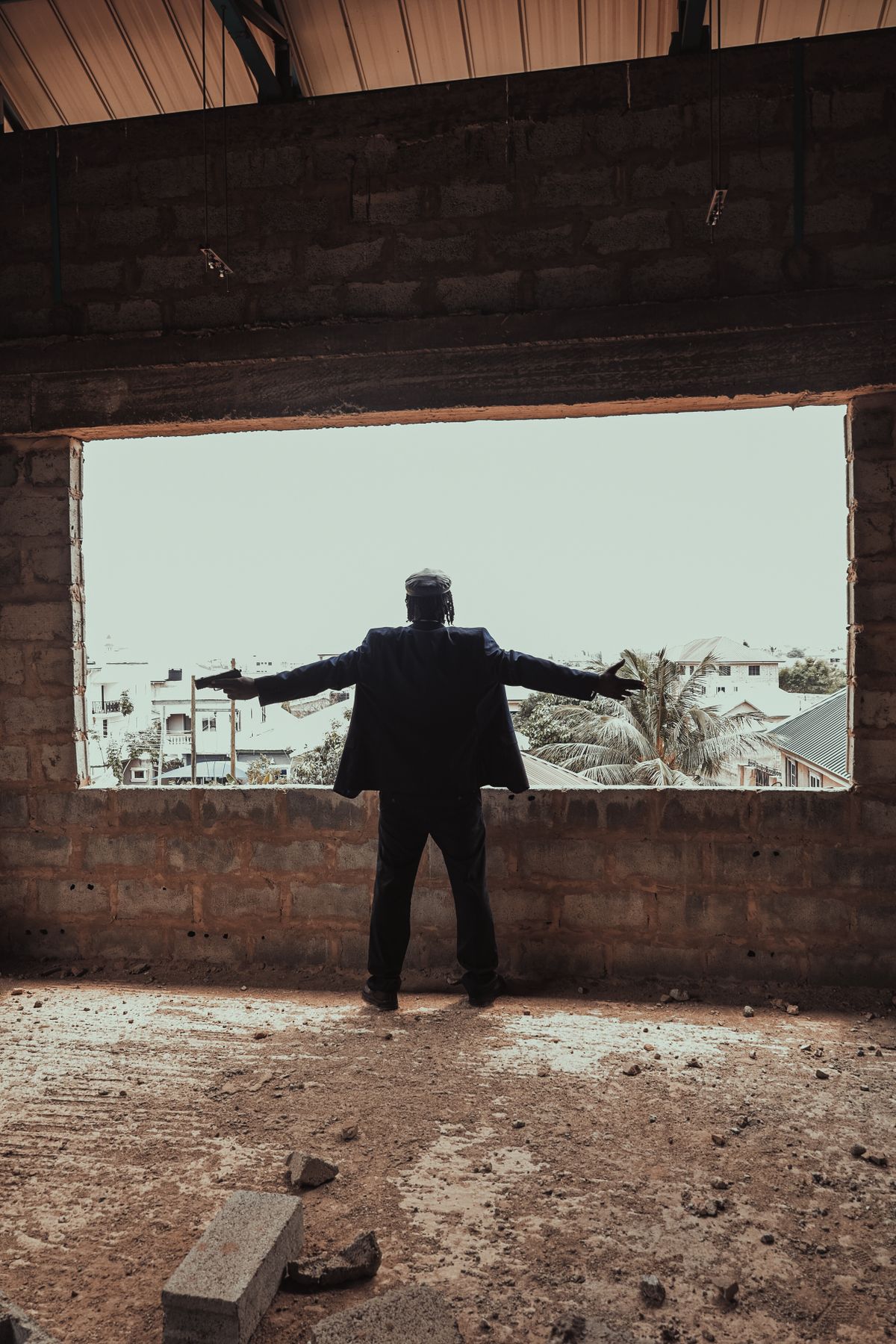
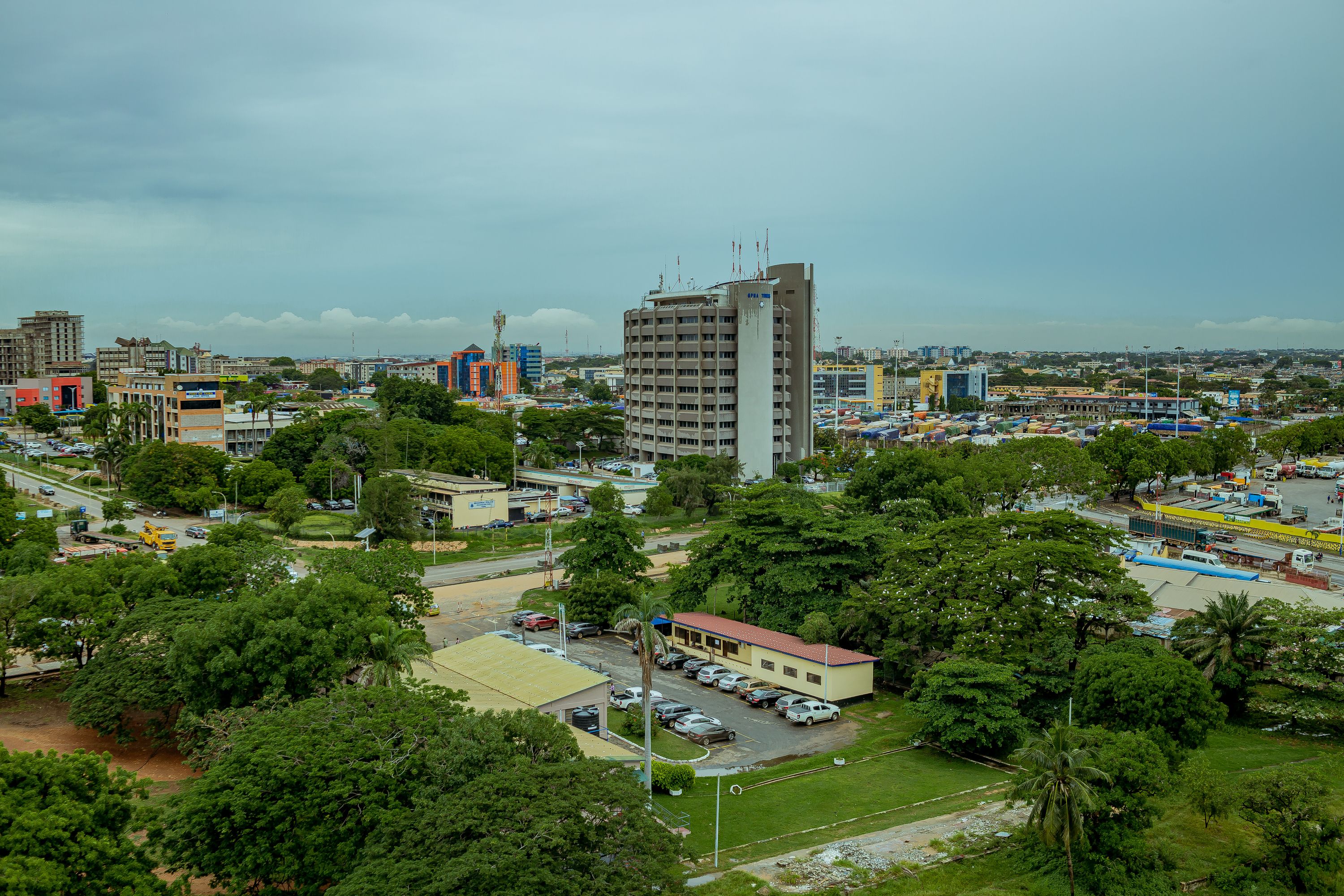
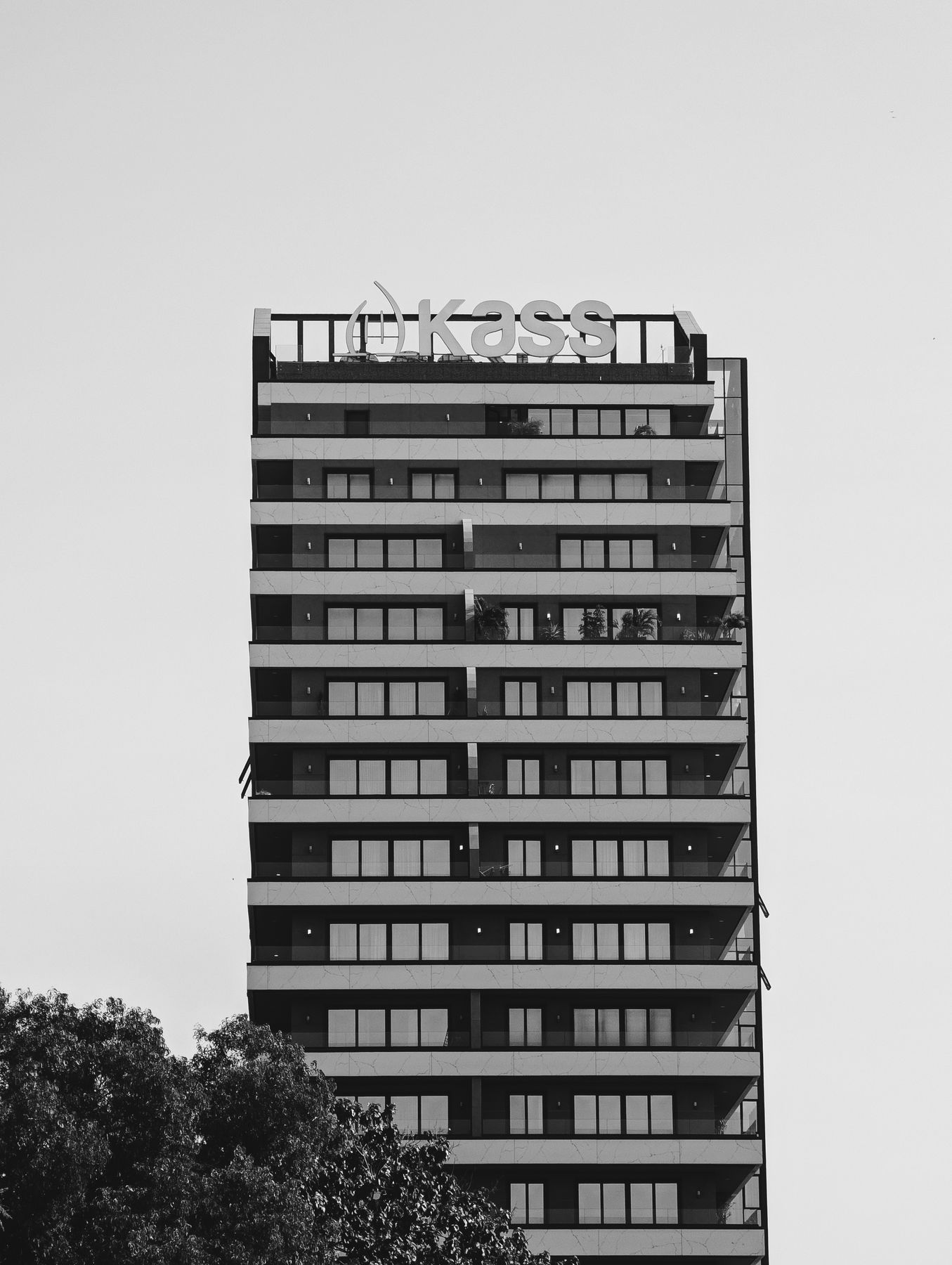
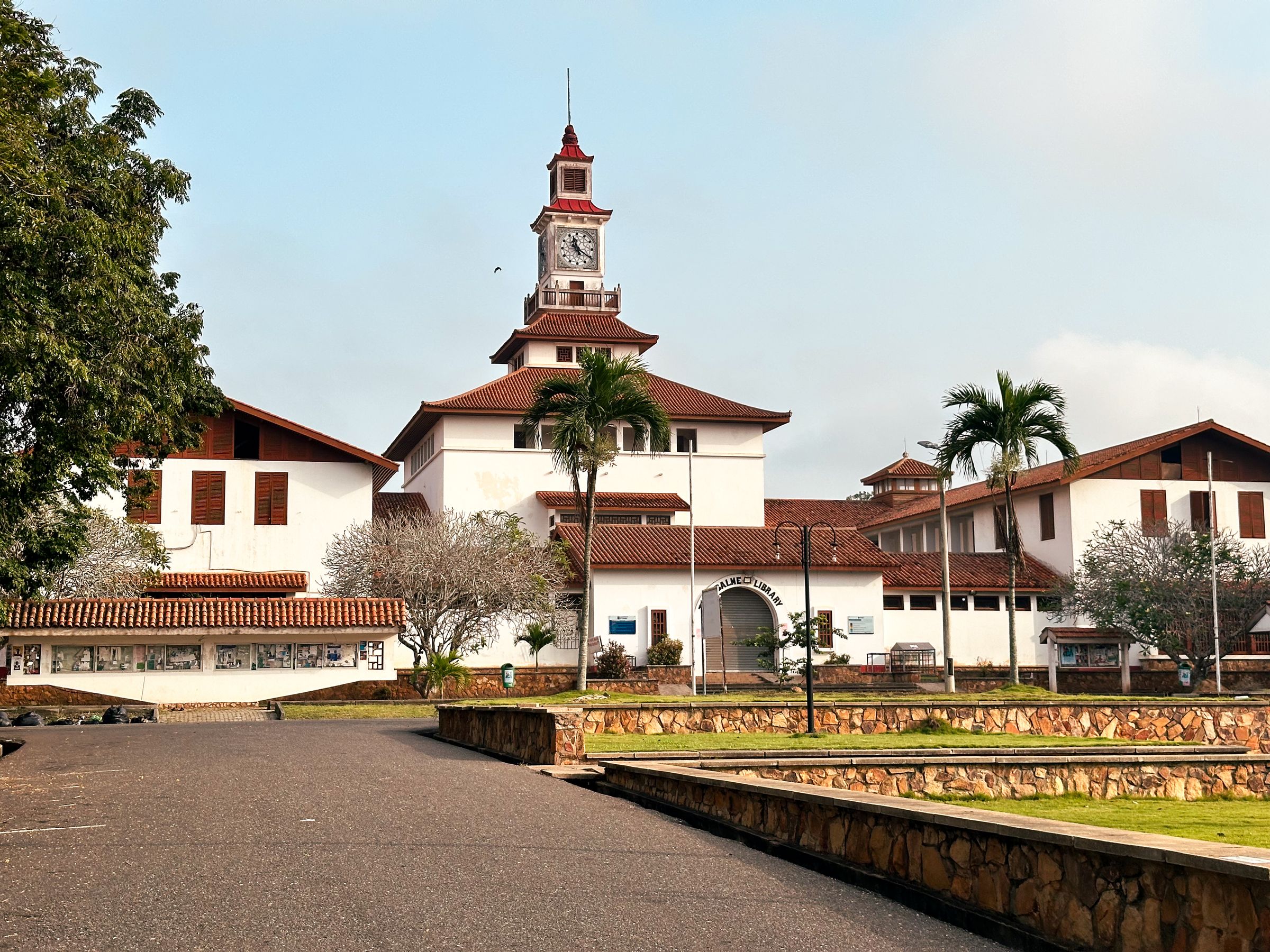
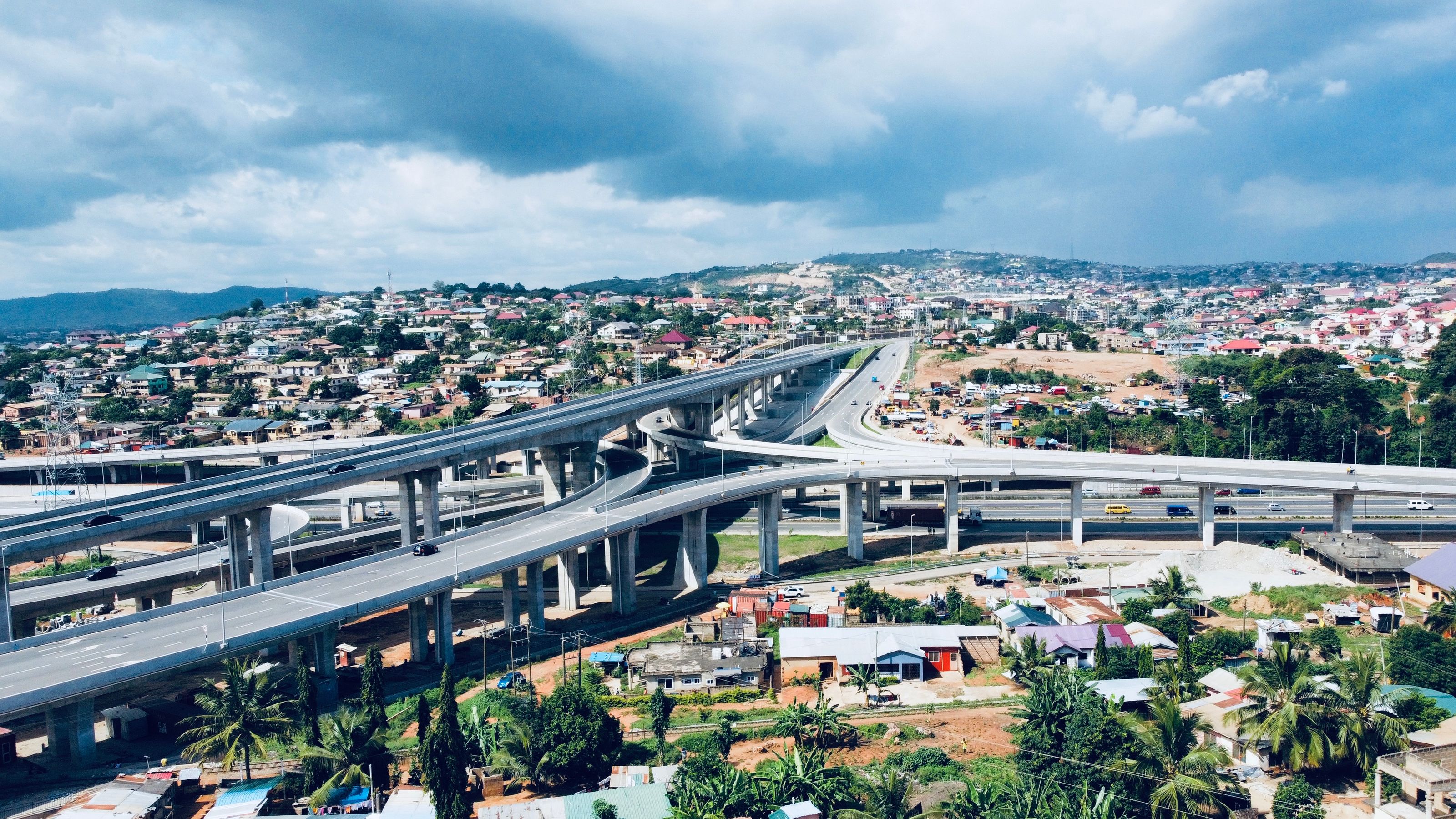
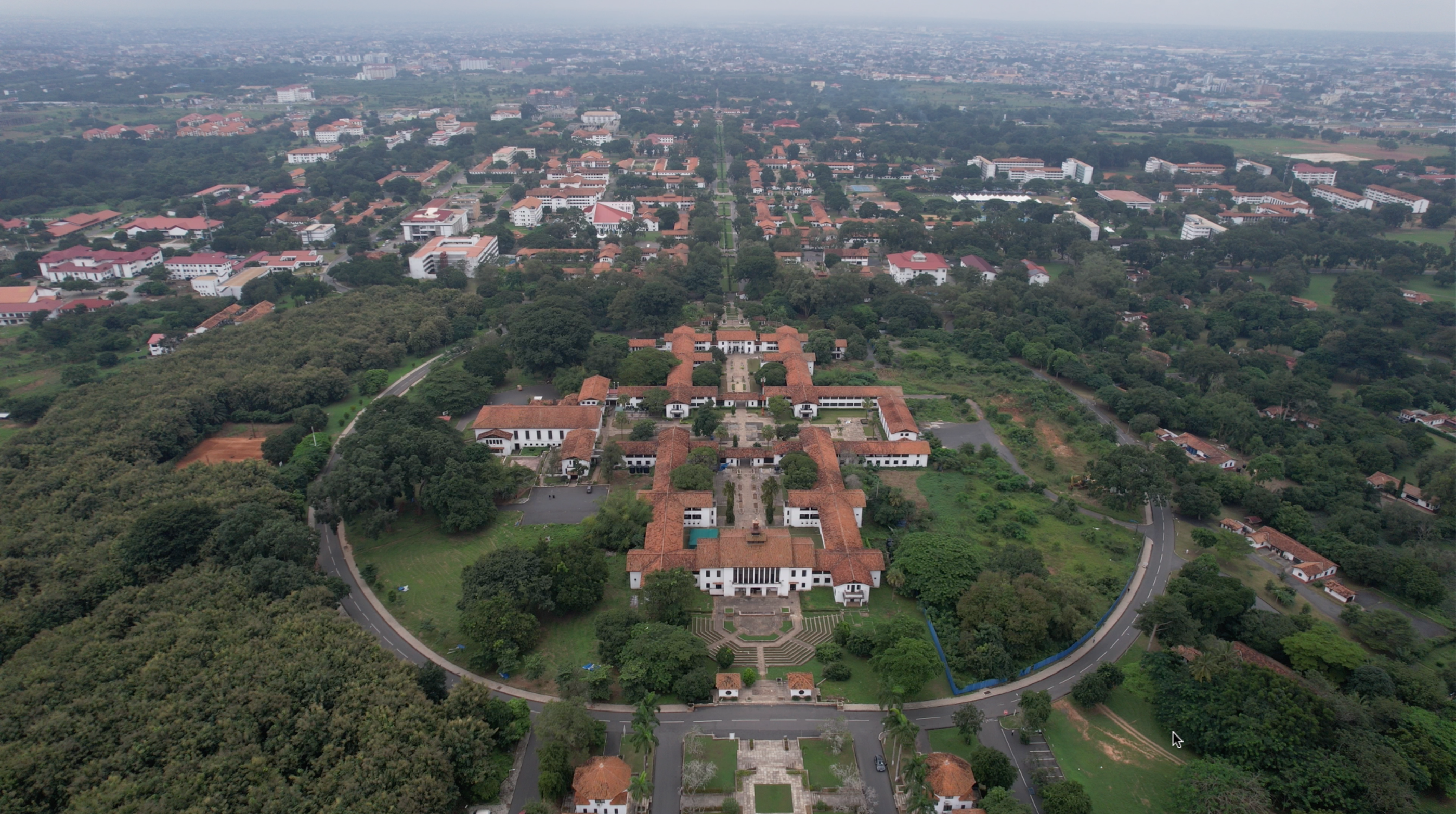
Imagery is representative of the asset types listed and is not a record of specific SkyClean jobs.
Book a site assessment
Tell us what the asset is and where it stands. We come back within one business day to arrange an assessment, and the proposal that follows is free.
Your building is judged from the outside before anyone walks in.
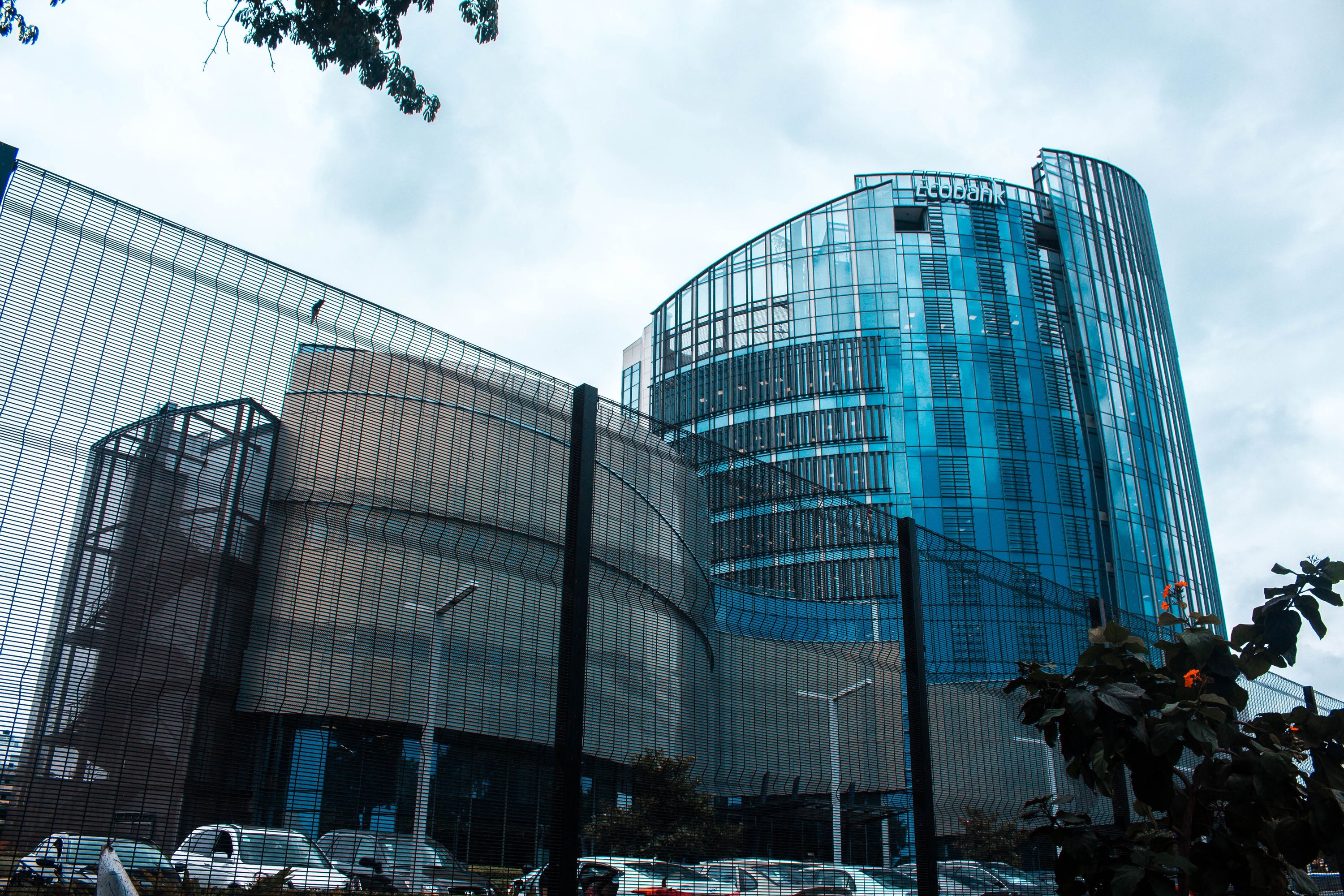
Accra glass takes sea salt, Harmattan dust and exhaust film faster than almost anywhere on the continent. We clean the full elevation from the air — nobody works over the edge.
What we clean
Curtain wall and structural glazing, spandrel panels, aluminium composite cladding, painted steel, precast concrete, natural stone, render and louvre systems. We work on occupied buildings, live retail frontages and hospital elevations where downtime is not an option.
How the work is done
A survey flight maps the elevation and records the condition of every face before anything is washed. The wash platform then runs a planned path across the elevation, applying filtered, deionised water at controlled pressure. The surface dries without spotting because there is nothing left in the water to leave a mark. Ground crew manage water supply, exclusion zones and run-off.
What you avoid
Scaffold hire and erection time. Cradle certification and rope-access supervision. Anchor point testing. Permits for pavement closures that go with a scaffold base. Weeks of a wrapped building. And the single largest exposure in the whole category — a person suspended above a public street.
- Typical elevation
- 4 to 40 storeys
- Crew on site
- 2 to 4
- Water source
- Filtered, deionised on site
- Occupancy impact
- Building stays open
- Deliverable
- Before and after imagery, flight log, sign-off sheet
Outcomes, not activity
Full elevation cleaned without cradle, rope or scaffold
Condition photography of every face as a by-product
Cycles short enough to schedule around tenants and guests
No pavement closure or ground-level obstruction in most cases
Often scoped together
Book a site assessment
Tell us what the asset is and where it stands. We come back within one business day to arrange an assessment, and the proposal that follows is free.
A dusty array is a plant running below its own nameplate.
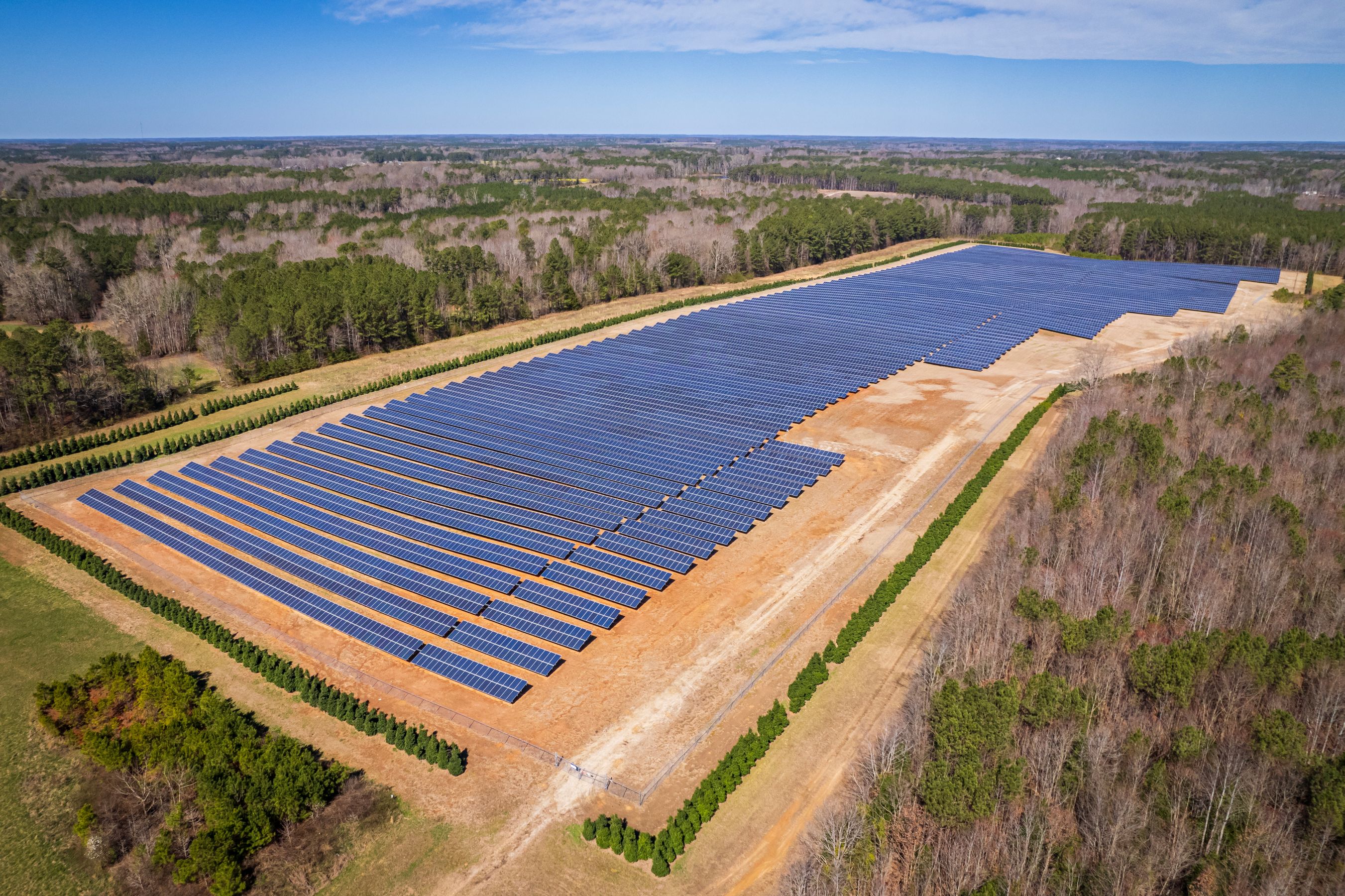
Soiling is the most predictable loss on a Ghanaian solar asset, and the only one you can reverse in a day. We clean arrays from the air, without walking the rows.
Why soiling matters here
Between December and February, airborne dust loading across West Africa rises sharply. Modules do not fail — they simply pass less light. Because the loss is gradual, most operators only see it in a monthly yield report, by which point the energy is already gone. The fix is a cleaning cycle set against your own soiling rate rather than a fixed calendar habit.
How we clean
Non-contact wash using filtered, deionised water. No brushes dragged across anti-reflective coating, no detergent residue left to attract the next layer of dust, no technician weight on module frames or rails. On rooftops we avoid the fall-risk of a technician moving between arrays on a sloped or fragile roof entirely.
Measuring the result
Where inverter-level or string-level data is available, we take a yield reading before and after the cycle so the recovery is evidenced rather than assumed. Where it is not, we record irradiance-referenced spot readings. Either way you get a number, not an impression.
- Asset types
- Ground-mount, rooftop C&I, carport, mini-grid
- Method
- Non-contact, deionised water
- Chemistry
- None on standard cycles
- Downtime
- Minimal — planned around dispatch
- Deliverable
- Pre and post yield reference, coverage map, flight log
We do not guess how often your array needs cleaning
Two plants forty kilometres apart can carry very different losses on the same day. Proximity to unpaved roads, agriculture, construction, coastline and industry all move the number. So we measure yours.
Measure your own soiling rate
We clean a reference section and compare its output against the rest of the array over several weeks. That gives the daily loss rate for your site rather than an industry average borrowed from somewhere else.
Price the loss against your own tariff
Once the rate is known, the loss stops being a percentage and becomes a monthly figure in cedis, set against your effective tariff or your avoided diesel cost. That is the number a board can act on.
Set the interval, then review it
The cleaning interval falls out of the arithmetic. We set it, run the first year, and adjust against what actually happened rather than what was assumed at the start.
Bring us your yield data
If you have inverter or string-level output for the last twelve months, send it with your enquiry. We can usually identify the soiling signature in it before we ever visit the site.
Outcomes, not activity
Recovered output measured against your own meter
No abrasion risk to anti-reflective coating
No personnel walking arrays or fragile roofs
Cycle frequency set to your measured soiling rate, not a guess
Often scoped together
Book a site assessment
Tell us what the asset is and where it stands. We come back within one business day to arrange an assessment, and the proposal that follows is free.
Large roofs are cleaned rarely because access is the whole problem.
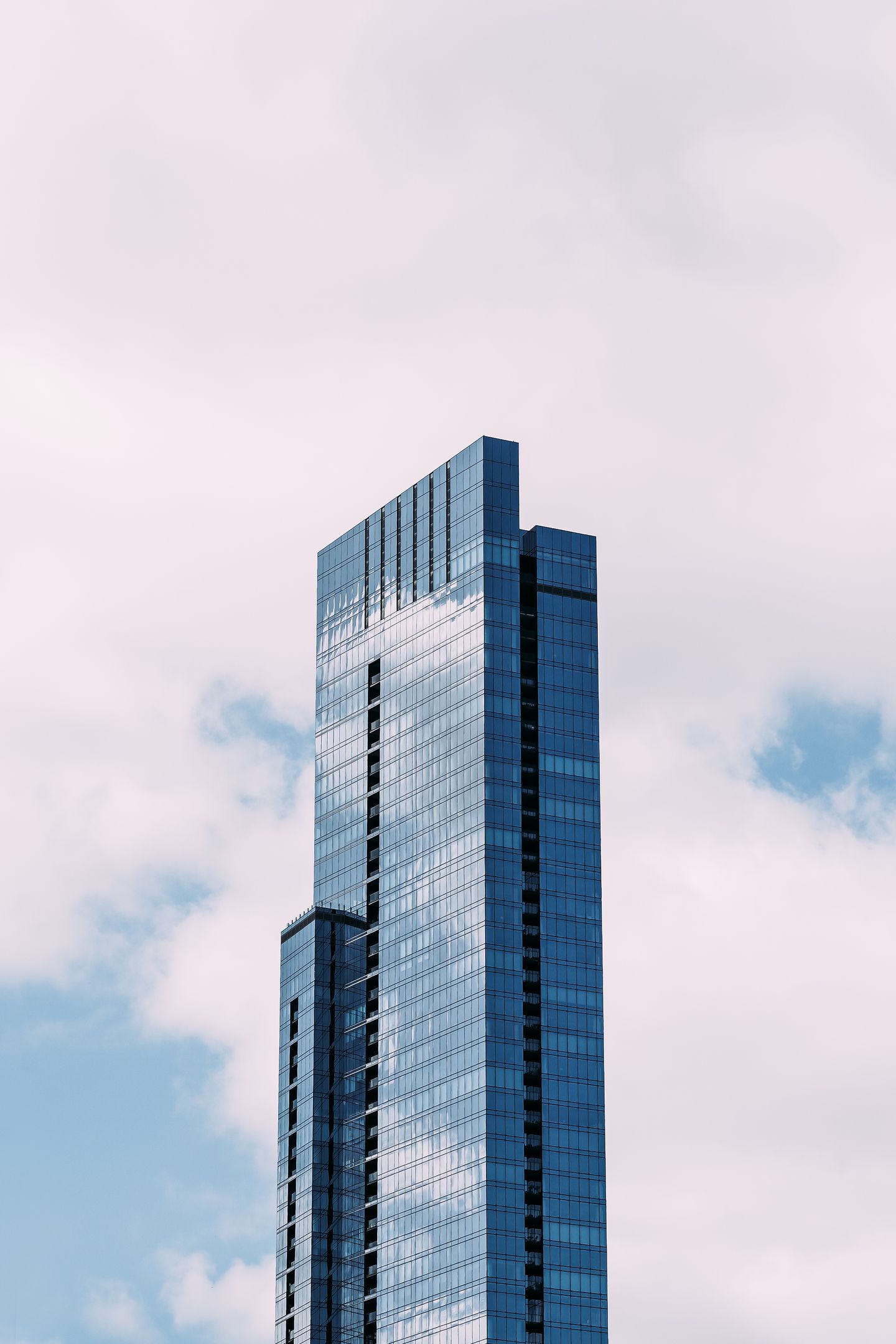
An industrial roof is the biggest surface on site and the one nobody wants to walk. Fragile sheeting and open edges make manual access a permit exercise. Flying removes the question.
What this covers
Profiled metal sheeting, insulated panel roofs, translucent skylight banks, gutters and valleys, wall cladding, signage bands and canopy structures across warehousing, manufacturing, cold chain and free-zone facilities.
Why it is worth doing
Biological growth and dust retain moisture against coatings and fixings, which is where corrosion starts. Blocked valleys and gutters put water where the roof was never designed to hold it. Dirty skylights quietly raise daytime lighting load across a large floor plate. A cleaned roof also lets an inspection actually see the substrate.
Working around production
We plan flights around shift patterns and vehicle movements. There is no scaffold to build, no roof-edge protection to install, no permit to work at height for a cleaning crew, and no requirement to stop the lines below.
- Surface types
- Metal sheet, composite panel, skylight, gutter line
- Site types
- Warehouse, plant, cold chain, free zone
- Access equipment
- None required on most roofs
- Production impact
- Planned around shifts
- Deliverable
- Coverage map, defect notes, flight log
Outcomes, not activity
Nobody on a fragile roof
Skylight transmission restored, lighting load reduced
Corrosion-driving soil and growth removed from coatings and fixings
Condition notes on flashings, fixings and standing water
Often scoped together
Book a site assessment
Tell us what the asset is and where it stands. We come back within one business day to arrange an assessment, and the proposal that follows is free.
Some structures are cleaned once a decade because sending a person up is that difficult.
Vertical process assets carry the heaviest access burden on any site: scaffold, permits, standby rescue, a production window. Flying turns a shutdown item into a scheduled task.
Assets we work on
Storage tanks and tank farms, silos and hoppers, chimney stacks, process towers, pipe racks and gantries, telecom and transmission masts, port and bridge steelwork, and high-level signage on industrial estates.
The access maths
A conventional clean on a 25 metre silo carries scaffold design, erection, inspection, dismantling, a rescue plan and standby cover — most of the cost and nearly all of the risk sits in access rather than cleaning. Removing the access removes both.
Combined with inspection
Because the platform is already flying the structure, we capture a full visual record in the same mobilisation: coating breakdown, corrosion bloom, weld and seam condition, ladder and cage condition, and anything obstructing drainage.
- Structures
- Tanks, silos, stacks, masts, gantries, steelwork
- Height range
- Site specific, planned per structure
- Permits
- No confined space or height permit for cleaning crew
- Shutdown
- Often avoidable
- Deliverable
- Condition imagery, defect register, flight log

Outcomes, not activity
No scaffold, no rope, no standby rescue team for cleaning
Coating and corrosion condition captured in the same visit
Work scheduled outside shutdown windows where process allows
A defensible record of what the structure looked like on the day
Often scoped together
Book a site assessment
Tell us what the asset is and where it stands. We come back within one business day to arrange an assessment, and the proposal that follows is free.
You cannot budget for a defect you have never seen.
Most owners work from a condition picture assembled out of complaints. A structured aerial survey replaces it with evidence: every elevation, every roof plane, indexed and dated.
Visual survey
Systematic capture of every face and plane at a resolution that shows sealant failure, cracked or slipped panels, staining patterns, blocked drainage, failed fixings and coating breakdown. Images are indexed to a location reference so a finding can be found again.
Thermal survey
For solar, thermal capture identifies hot cells, bypass diode activity, string-level anomalies and connection faults that a visual pass will never show. For buildings, it highlights moisture ingress paths and insulation discontinuity.
What you receive
A condition report with findings ranked by severity, referenced imagery, and a plain recommendation for each item: monitor, plan, or act. It is written to be handed to a board or a maintenance contractor without translation.
- Capture
- High-resolution visual, thermal where specified
- Coverage
- All elevations, roof planes or array blocks
- Output
- Indexed imagery and ranked defect register
- Turnaround
- Report issued after survey, timing agreed at scoping
- Use cases
- Handover, dilapidations, insurance, budget planning
Outcomes, not activity
A dated, evidenced condition baseline for the asset
Findings ranked so a maintenance budget can be built from them
Thermal detection of faults invisible to a visual inspection
Survey and clean combined in one mobilisation where useful
Often scoped together
Book a site assessment
Tell us what the asset is and where it stands. We come back within one business day to arrange an assessment, and the proposal that follows is free.
Reactive cleaning is always the most expensive way to buy it.
A one-off clean fixes today. A programme protects the asset and turns an unpredictable line item into a figure you can defend at budget time.
How a programme is built
We start from the asset, not a template: elevation area or array capacity, exposure, local soiling drivers, tenant or guest sensitivity, and what the asset is worth to your business when it looks neglected. From that we set a cycle frequency and a fixed annual figure.
What is included
Scheduled cycles at agreed intervals. Condition reporting after each cycle. An annual comparison so change is visible year on year. A defined response window for unplanned events. And a single point of contact who knows the building rather than a new crew each time.
Multi-site portfolios
For facility managers and property groups we run a single programme across a portfolio with one schedule, one reporting format and one point of contact — so a regional report can be produced without chasing four contractors.
- Term
- Annual, renewable, or multi-year
- Cycles
- Set to measured soiling and exposure
- Reporting
- After every cycle plus annual comparison
- Response
- Defined window for unplanned events
- Scope
- Single asset or full portfolio
Outcomes, not activity
A fixed annual figure instead of unpredictable call-outs
Priority scheduling ahead of ad-hoc requests
Year-on-year condition record for the asset file
One contact and one reporting format across a portfolio
Often scoped together
Book a site assessment
Tell us what the asset is and where it stands. We come back within one business day to arrange an assessment, and the proposal that follows is free.
Different assets, the same access problem.
A hotel elevation, a warehouse roof and a tank farm look nothing alike, but they fail maintenance for the same reason: getting a person safely to the surface is harder than the cleaning itself.
Commercial real estate
Landlords and asset managers protecting rent-roll value and letting appeal across office and mixed-use stock.
Typical scope: Elevation cleaning cycles, condition surveys for dilapidations, portfolio-wide programmes.
Hospitality
Hotels and resorts where an exterior is the first thing a guest reviews and a cradle is the last thing they want to see.
Typical scope: Off-peak scheduling, no guest-facing disruption, pre-season deep cycles.
Healthcare
Hospitals and clinics where infection control, noise and access restrictions rule out conventional high-access work.
Typical scope: No scaffold at entrances, minimal noise, planned around clinical hours.
Banking and corporate HQ
Headquarters buildings where the elevation is part of the brand and security limits who gets close to it.
Typical scope: Discreet crews, security-cleared scheduling, documented flight approvals.
Solar IPPs and EPCs
Independent power producers and EPC contractors defending yield against soiling losses.
Typical scope: Measured cleaning cycles, thermal survey, pre and post yield referencing.
Manufacturing and FMCG
Plants where roof access is a permit exercise and the line cannot stop for cleaning.
Typical scope: Roof and cladding cycles around shift patterns, silo and vessel cleaning.
Logistics and free zone
Warehousing and free-zone operators with very large roof areas and continuous vehicle movement.
Typical scope: Large-area roof cleaning, skylight restoration, gutter line clearing.
Energy and resources
Fuel storage, processing and distribution sites with vertical assets that are costly to access.
Typical scope: Tank and stack cleaning, structural steel, coating condition survey.
Telecoms and infrastructure
Mast, tower and transmission operators maintaining dispersed vertical assets.
Typical scope: Structure cleaning and inspection without a climb team.
Education and institutions
Universities, schools and public institutions with mixed estates and constrained maintenance budgets.
Typical scope: Term-time-safe scheduling, condition surveys to support capital planning.
Book a site assessment
Tell us what the asset is and where it stands. We come back within one business day to arrange an assessment, and the proposal that follows is free.
The drone is the visible part. The method is the product.
Anyone can buy an aircraft. What makes a flown clean work is the water you put through it, the plan you fly and the record you leave.
Three parts to every mobilisation
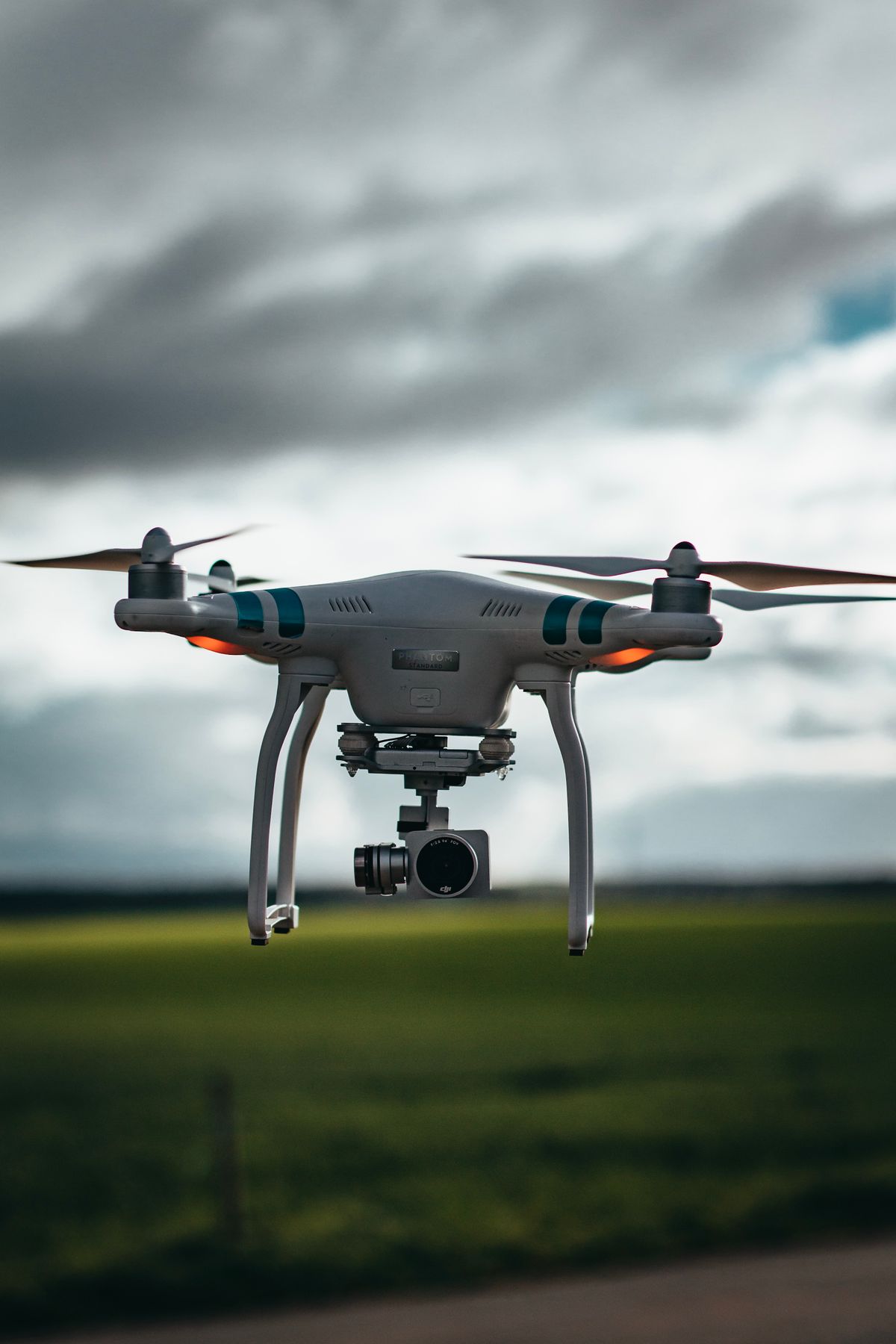
Survey and inspection platform
High-resolution visual capture, thermal payload where the job calls for it. Flies first on every engagement to build the elevation or array map the wash plan is based on.
Wash platform
Carries the nozzle assembly and delivers filtered, deionised water at a pressure set to the substrate. Flies the planned path with the pilot on station and a spotter alongside.
Ground water train
Filtration and deionisation on site, pressure and flow control, supply management and containment. The part of the operation nobody photographs and everything depends on.
Why deionised water cleans better than detergent
Ordinary water carries dissolved minerals. They stay behind as spotting and film — which is why conventional washing needs a squeegee, and someone holding it.
Strip the solids out and the chemistry changes. Pure water pulls dirt off the surface, then dries leaving nothing. No squeegee, no detergent residue for the next dust layer to bond to, nobody at the glass.
Where a surface genuinely needs chemistry, we use the mildest effective product, only where needed, and record it on the job sheet.
Limits set before take-off
Thresholds are set per site and per platform in the flight plan, not judged on the day. When a limit is crossed, the flight stops.
- Wind
- Threshold set per platform and elevation
- Precipitation
- No flight in active rain
- Visibility
- Visual line of sight maintained at all times
- Ground exclusion
- Established before take-off, held throughout
- Abort authority
- Pilot in command, without consultation
- Reschedule
- Weather days built into the programme
Every flight leaves a record
The aircraft already covers every square metre of the asset. Capturing that is free. Not capturing it is the waste.
Flight log
Date, pilot, platform, path flown, duration and conditions, issued with the job pack.
Condition imagery
Before and after capture of every face or plane, indexed so a finding can be located again.
Consumption record
Water volume and any chemistry used, in a format you can drop into ESG reporting.
Findings register
Anything we noticed while flying: sealant failure, corrosion, blocked drainage, damage.
Ask for the technical detail
Procurement and engineering teams usually want more than a web page. Ask and we will send the method statement template, insurance summary and a sample job pack.
The safest job at height is the one nobody is standing in.
Removing rope and scaffold removes the largest category of exposure in exterior maintenance. What replaces it is a smaller set of risks, controlled with paperwork, planning and hard limits.
Regulatory compliance
Commercial drone work in Ghana sits under the GCAA. We do not fly without the applicable operator and site permissions, and we show you the paperwork before we mobilise.
Qualified pilots
Every flight is commanded by a trained remote pilot working with a ground spotter. The pilot in command for your site is named in the flight plan.
Written method and risk assessment
Each site gets its own method statement and risk assessment: airspace, public exposure, overhead services, run-off, weather limits, abort criteria. Issued before the job.
Exclusion zones
A physical exclusion zone is set before take-off and held by ground crew throughout. Public and staff routes are diverted, not trusted.
Hard weather limits
Wind, rain and visibility thresholds are set per site in the flight plan. Cross one and the flight stops. Rescheduling costs less than an incident.
Insurance
Operations carry liability cover appropriate to commercial UAV work. Certificates come during procurement, not after an incident.
Six questions to ask any drone contractor
Including us. A competent operator answers all six without hesitation. Hesitation is the finding.
Can you show your current operator approval and its scope?
Who is the pilot in command for this job and what is their licence status?
What site-specific permission does this location require, and has it been obtained?
What is your liability limit and does the policy name UAV operations?
What are your weather abort criteria and who makes the call to stop?
What documentation do we receive after the flight?
What lands in your file
- Operator permission
- Copy provided
- Site-specific clearance
- Obtained and evidenced
- Method statement
- Issued pre-job
- Risk assessment
- Site specific
- Insurance certificate
- On request
- Pilot in command
- Named in the plan
- Abort criteria
- Stated in writing

Every hour flown is an hour nobody spent over a parapet
Routine cleaning is the most repetitive at-height work on any building. Removing it is the single biggest change you can make to your access risk.
What flying does not fix
Drone operations carry their own exposures. Pretending otherwise would be the first reason not to trust us.
Aircraft over a ground area
Controlled by a physical exclusion zone established before take-off and held by ground crew for the duration, plus a spotter working alongside the pilot.
Water run-off
Planned before the flight: drainage identified, sensitive ground and landscaping protected, containment used where the setting requires it.
Weather dependency
Flights abort and reschedule when limits are crossed. We build weather days into the programme so this is expected rather than disputed.
Book a site assessment
Tell us what the asset is and where it stands. We come back within one business day to arrange an assessment, and the proposal that follows is free.
Cleaning that does not need a lorry, a scaffold and a month.
The environmental case is mostly about what is no longer required: less water on the same surface, no detergent on standard cycles, no scaffold to transport, far fewer vehicle movements.
Water
We apply water to the surface being cleaned rather than flooding an elevation from a cradle. With on-site filtration, a cycle uses substantially less water than a conventional wash of the same area.
Chemistry
Deionised water cleans glass and modules without detergent on standard cycles. Where a surface genuinely needs chemistry, we use the mildest effective product, only where required.
Carbon
No scaffold means no scaffold transport and no erection crew travelling daily for weeks. Shorter mobilisations, fewer vehicle movements, same result.
Run-off
Planned before the flight: drainage routes identified, sensitive ground protected, containment where the setting needs it.
Reporting
Water volume, cycle duration and method go out with each job, in a format your own reporting can absorb without re-keying.
- Water volume
- Per cycle, litres
- Chemistry
- Product and area, if used
- Duration
- Flight hours and site days
- Mobilisations
- Vehicle movements per cycle
- Method
- Access equipment avoided
Issued in a format your own reporting can absorb without re-keying or estimating after the fact.
The figures we publish are the ones we recorded on your job
Reduction percentages depend on the surface, the elevation and the method being replaced. Rather than borrow an industry average, we log what your cycle actually consumed and hand you that.
We report measured figures, not marketing ones
Reduction percentages depend on the surface, the elevation and the method being replaced. We record what your job used rather than publishing an average and hoping it fits.
Book a site assessment
Tell us what the asset is and where it stands. We come back within one business day to arrange an assessment, and the proposal that follows is free.
Everything we have written, filmed and documented.
Articles on the Ghanaian market, footage of the method on real elevations, and the documents your procurement team will ask for. All of it free, none of it gated.
What Harmattan dust actually costs a Ghanaian solar plant
Soiling is the most predictable loss on a solar asset in West Africa, and the only one you can fully recover in an afternoon.
Rope access versus drone: where the risk actually sits
Most of the cost and nearly all of the danger in high-access cleaning belongs to access, not to cleaning.
What Ghana's drone rules mean for work on your site
A short guide for facility managers and procurement teams on what to ask a UAV contractor before they mobilise.
Putting a façade cleaning cycle into a maintenance budget
How to move exterior cleaning from an irregular call-out into a defensible annual line.
Airport City to Ridge: what Accra's glass belt costs to keep clean
A corridor of curtain wall went up in fifteen years. The maintenance market that should have followed it did not.
Tema's roofs: the free zone's largest untouched surface
The biggest single surface on most Tema sites is the one nobody has costed, inspected or cleaned since the building went up.
Salt, Harmattan and the sea breeze: how coastal Accra ages a façade
Four separate loads hit a building in Greater Accra, and each one damages a different part of the elevation.
Cleaning a hotel elevation without losing a night's occupancy
Guests review the exterior before they ever see the room. The problem has always been doing something about it while they are in it.
Six questions for a drone contractor
A one-page checklist for procurement and facilities teams evaluating any UAV cleaning supplier, including us.
Site assessment checklist
What we look at during an assessment, so your team can prepare and shorten the visit.
What lands in your asset file
The record issued after every cycle, in the order it is delivered.
Setting a cleaning cycle
How frequency is derived from exposure rather than the calendar, for façades and for solar.
Want the footage from your own building?
Every cycle we fly is recorded. Book an assessment and the imagery from your asset comes back with the job pack.
Notes for the people who own the asset and the budget.
Short, specific pieces on soiling, access risk, compliance and maintenance planning in the Ghanaian market. No thought leadership, no filler.
What Harmattan dust actually costs a Ghanaian solar plant
Soiling is the most predictable loss on a solar asset in West Africa, and the only one you can fully recover in an afternoon.
Rope access versus drone: where the risk actually sits
Most of the cost and nearly all of the danger in high-access cleaning belongs to access, not to cleaning.
What Ghana's drone rules mean for work on your site
A short guide for facility managers and procurement teams on what to ask a UAV contractor before they mobilise.
Putting a façade cleaning cycle into a maintenance budget
How to move exterior cleaning from an irregular call-out into a defensible annual line.
Airport City to Ridge: what Accra's glass belt costs to keep clean
A corridor of curtain wall went up in fifteen years. The maintenance market that should have followed it did not.
Tema's roofs: the free zone's largest untouched surface
The biggest single surface on most Tema sites is the one nobody has costed, inspected or cleaned since the building went up.
Salt, Harmattan and the sea breeze: how coastal Accra ages a façade
Four separate loads hit a building in Greater Accra, and each one damages a different part of the elevation.
Cleaning a hotel elevation without losing a night's occupancy
Guests review the exterior before they ever see the room. The problem has always been doing something about it while they are in it.
Everything on this page is about buildings in this market
Soiling rates, access costs, airspace rules and maintenance budgets all behave differently in Accra than they do in the case studies imported from elsewhere. These notes are written from what we see on Ghanaian assets.
Book a site assessment
Tell us what the asset is and where it stands. We come back within one business day to arrange an assessment, and the proposal that follows is free.
What Harmattan dust actually costs a Ghanaian solar plant
Soiling is the most predictable loss on a solar asset in West Africa, and the only one you can fully recover in an afternoon.
The loss nobody puts in the model
Financial models for solar assets in West Africa are careful about irradiance, degradation, availability and tariff. Soiling usually appears as a single conservative percentage, set once at financial close and never revisited. In practice it is the most variable line in the whole yield stack, and the only one that can be reversed in a single working day.
Dust does not damage a module. It sits on the glass and takes light out of the system before the cell ever sees it. Because the loss is gradual and uniform across an array, nothing alarms. Nothing fails. The plant simply produces less, month after month, and the shortfall is quietly absorbed into performance ratio.
Why the dry season changes the maths
Between December and February, the Harmattan carries fine mineral dust south across West Africa. Particle size matters more than volume here: fine dust adheres to glass, resists being blown off, and forms an even layer that scatters light rather than blocking it in patches. It is the worst possible optical outcome for a photovoltaic surface.
It is also the period when there is no rain to help. Operators who rely on wet-season rainfall as a de facto cleaning cycle find that the strategy simply stops working for a quarter of the year — exactly when clear-sky irradiance is at its highest and every lost percentage point is worth the most.
The question is not whether an array is soiled. It is whether anyone has measured how much it is costing this month.
Turning a percentage into a number
Soiling loss becomes a management conversation the moment it is expressed in energy and currency rather than percent. Take installed capacity, a realistic specific yield for the site, the loss you are carrying, and your effective tariff or displaced-diesel cost. The result is a monthly figure that can be set directly against the cost of a cleaning cycle.
For most commercial and utility assets, the arithmetic settles the argument on its own. A cleaning cycle that recovers even a portion of a mid-single-digit loss typically pays for itself well inside a month of restored production. The uncomfortable part is not the cost of cleaning — it is realising how many months went past before anyone ran the numbers.
Setting a cycle you can defend
A fixed calendar cycle is better than nothing, but it is rarely optimal. Sites soil at different rates depending on proximity to unpaved roads, agriculture, construction, coastline and industry. Two plants forty kilometres apart can carry very different losses on the same day.
The defensible approach is to establish your own soiling rate: clean a reference section, compare its output against the rest of the array over several weeks, and derive the daily loss rate for your site. From there the cleaning interval is an optimisation problem with a clean answer, and one you can put in front of a board.
How the cleaning is done matters
Two things damage modules over a plant's life: abrasion of the anti-reflective coating, and load applied to frames and rails by people and equipment moving across the array. Both are introduced by the cleaning method rather than by the dust.
Non-contact washing with deionised water avoids both. Nothing abrades the coating, nothing bears on the structure, and because deionised water leaves no dissolved solids behind, the surface dries without the mineral film that gives the next dust layer something to bond to. On rooftop and carport arrays there is an additional benefit that has nothing to do with yield: nobody has to be up there.
What to do next
If you operate a solar asset in Ghana and cannot state your current soiling loss as a number, that is the first thing to fix. Measure it, price it, and only then decide how often to clean. The cost of the decision is small. The cost of not making it accrues every clear-sky day.
Want this applied to your asset?
A site assessment turns everything above into numbers for your building or plant. It is free and it takes one visit.
More insights
Rope access versus drone: where the risk actually sits
Most of the cost and nearly all of the danger in high-access cleaning belongs to access, not to cleaning.
What Ghana's drone rules mean for work on your site
A short guide for facility managers and procurement teams on what to ask a UAV contractor before they mobilise.
Putting a façade cleaning cycle into a maintenance budget
How to move exterior cleaning from an irregular call-out into a defensible annual line.
Rope access versus drone: where the risk actually sits
Most of the cost and nearly all of the danger in high-access cleaning belongs to access, not to cleaning.
Separating the two activities
High-access cleaning is habitually priced and discussed as one activity. It is two. There is the cleaning — water, chemistry, technique, dwell time. And there is the access — getting a person and their equipment to a surface thirty metres above a public pavement, keeping them there safely, and getting them down.
Once you separate them, the picture changes. Cleaning is the cheap, low-risk part. Access carries the scaffold design, the erection and dismantle programme, the inspection regime, the anchor testing, the rescue plan, the standby cover, the permits, and the insurance loading. It also carries essentially all of the fatality risk in the category.
What the access layer really costs
On a tall or complex elevation, access frequently accounts for the majority of the total price and almost all of the programme duration. A scaffold that takes weeks to erect and dismantle for a wash that takes days is not unusual. During that period the building is wrapped, the ground floor is obstructed, and in many cases a section of pavement is closed under permit.
Rope access reduces the erection burden but replaces it with a different set of obligations: anchor testing and certification, technician certification and currency, supervision ratios, and a rescue capability that must be present for the duration of every working shift.
Removing the access layer does not reduce the risk of working at height. It removes the exposure entirely, because nobody is at height.
Residual risk when the work is flown
Flying the work is not risk-free, and it would be dishonest to present it that way. It introduces a different and much smaller set of exposures: an aircraft above a ground area, water run-off, third-party property beneath the flight path, and airspace obligations.
Each of these is controlled by measures that are well understood and cheap to apply. A physical exclusion zone under the flight path. A spotter alongside the pilot. Weather thresholds with hard abort criteria. Run-off planning agreed before the flight. Regulatory permission obtained before mobilisation. None of these require a person to be suspended above a street.
How to compare the two properly
When you next tender high-access cleaning, ask for access and cleaning to be priced separately. It is a reasonable request and it changes the conversation immediately, because it exposes how much of the quotation is scaffold, supervision and rescue rather than the work you actually want done.
Then ask the second question: what is the consequence, for your organisation, of an incident involving a person working above a public area on your site? For most boards, once that question is asked out loud, the comparison stops being purely commercial.
Where rope access still wins
There are jobs a drone should not take. Work requiring physical contact — sealant replacement, mechanical repair, panel refixing, anything needing hand pressure or torque — needs a person there. Very confined light wells, deep recesses and heavily obstructed elevations can defeat a flight path. Sites where airspace permission genuinely cannot be obtained are simply not available to fly.
The honest position is that drone cleaning removes the largest and most repetitive category of at-height exposure — routine cleaning — and leaves rope access for the work that genuinely needs hands on the building. That is a better allocation of risk than sending someone over the parapet twice a year to wash glass.
Want this applied to your asset?
A site assessment turns everything above into numbers for your building or plant. It is free and it takes one visit.
More insights
What Harmattan dust actually costs a Ghanaian solar plant
Soiling is the most predictable loss on a solar asset in West Africa, and the only one you can fully recover in an afternoon.
What Ghana's drone rules mean for work on your site
A short guide for facility managers and procurement teams on what to ask a UAV contractor before they mobilise.
Putting a façade cleaning cycle into a maintenance budget
How to move exterior cleaning from an irregular call-out into a defensible annual line.
What Ghana's drone rules mean for work on your site
A short guide for facility managers and procurement teams on what to ask a UAV contractor before they mobilise.

Who regulates this
Unmanned aircraft operations in Ghana fall under the Ghana Civil Aviation Authority. Commercial operations — anything flown for hire, reward or business purpose, which includes cleaning and inspection work on your building — are treated differently from recreational flying and carry their own approval requirements.
For the site owner, the practical consequence is straightforward: the obligation to be properly approved sits with the operator, but the consequence of an unapproved flight on your property lands on you as well. That makes verification part of procurement rather than an afterthought.
Location matters as much as the operator
Approval is not only about the company. It is about where and when they intend to fly. Proximity to aerodromes, controlled airspace, restricted or sensitive installations, and operations over people or public areas all change what permission is required for a specific site on a specific day.
In practice this means that a contractor who is properly approved in general may still require site-specific clearance for your particular location. A contractor who says approval is not necessary for your site should be asked to put that in writing.
Five questions to ask before you sign
- Can you show me your current operator approval and its scope?
- Who is the pilot in command for this job, and what is their licence status?
- What site-specific permission does this location require, and has it been obtained?
- What is your liability insurance limit and does it cover UAV operations specifically?
- What are your weather abort criteria and who makes the call to stop?
A competent operator will answer all five without hesitation and will offer the documents before you finish asking. Hesitation on any of them is the finding, not the answer.
What your own team should prepare
Site owners carry a share of the work. Before a flight day, useful preparation includes: confirming who controls the ground area beneath the intended flight path, identifying any external events or deliveries scheduled that day, notifying tenants or occupants, and flagging air intakes, opening windows and any sensitive equipment near the elevation.
Where the site sits inside a larger estate, a port, an airport perimeter or a secured industrial zone, the estate's own permit process usually applies on top of the aviation permission. Starting that conversation early is the single most common way to avoid a wasted mobilisation.
Keeping the record
Ask for the flight log and the permissions to be issued as part of the job pack alongside the before and after imagery. It costs the operator nothing and it means that if anyone asks — an insurer, a landlord, a regulator, a board — the answer exists in your asset file rather than in someone's memory.
Want this applied to your asset?
A site assessment turns everything above into numbers for your building or plant. It is free and it takes one visit.
More insights
What Harmattan dust actually costs a Ghanaian solar plant
Soiling is the most predictable loss on a solar asset in West Africa, and the only one you can fully recover in an afternoon.
Rope access versus drone: where the risk actually sits
Most of the cost and nearly all of the danger in high-access cleaning belongs to access, not to cleaning.
Putting a façade cleaning cycle into a maintenance budget
How to move exterior cleaning from an irregular call-out into a defensible annual line.
Putting a façade cleaning cycle into a maintenance budget
How to move exterior cleaning from an irregular call-out into a defensible annual line.
Why exterior cleaning stays reactive
In most buildings, exterior cleaning is triggered by an event rather than a schedule: a complaint, an inspection, a VIP visit, or a letting agent's photograph. The result is a lumpy, unplanned cost that is hard to defend at budget time and impossible to compare year on year.
The reason is usually not negligence. It is that nobody owns a number. Interior cleaning has a contract, a frequency and a monthly cost. The exterior has none of those, so it competes for attention against items that do.
Start with exposure, not the calendar
Buildings soil at very different rates depending on where they stand. In Accra, proximity to the coast introduces salt loading. Roadside and junction-adjacent buildings pick up exhaust film and brake dust. Sites near construction or unpaved routes carry a heavier particulate load. Sheltered inland stock in a low-traffic setting can look acceptable for far longer on the same specification of glass.
The practical starting point is a condition survey that records the current state of every elevation and identifies which faces are driving the perception of the building. Very often one or two elevations carry the problem, and a targeted cycle on those faces outperforms an infrequent full wrap of the whole building.
Build the line from three inputs
A defensible annual figure needs three things: the area to be cleaned by elevation, the cycle frequency for each elevation, and the unit approach for the access method. Once those are fixed, the number is arithmetic and can be presented as such.
The frequency conversation is where most of the value sits. Two cycles a year on the two exposed elevations plus one full pass may cost less than a single reactive full clean commissioned in a hurry, and it keeps the building continuously presentable rather than alternating between neglected and freshly done.
A building that is always acceptable costs less than a building that is periodically rescued.
What to include beyond the wash
A cleaning cycle is also the cheapest condition survey you will ever run, because the equipment is already covering every square metre of the elevation. Specifying that condition imagery and findings are returned with each cycle turns a cleaning line into an asset-management input at no additional mobilisation cost.
Over three or four cycles this accumulates into something genuinely valuable: a dated visual record of how the building is ageing, which supports capital planning, dilapidations discussions, insurance conversations and warranty claims.
Presenting it internally
Finance approves recurring lines more readily than surprises. Present the cycle as a fixed annual figure with a defined scope, a condition report attached to each cycle, and a year-on-year comparison. Attach the alternative — the reactive cost, plus the access risk carried each time a crew goes over the parapet — and the decision usually makes itself.
Want this applied to your asset?
A site assessment turns everything above into numbers for your building or plant. It is free and it takes one visit.
More insights
What Harmattan dust actually costs a Ghanaian solar plant
Soiling is the most predictable loss on a solar asset in West Africa, and the only one you can fully recover in an afternoon.
Rope access versus drone: where the risk actually sits
Most of the cost and nearly all of the danger in high-access cleaning belongs to access, not to cleaning.
What Ghana's drone rules mean for work on your site
A short guide for facility managers and procurement teams on what to ask a UAV contractor before they mobilise.
Airport City to Ridge: what Accra's glass belt costs to keep clean
A corridor of curtain wall went up in fifteen years. The maintenance market that should have followed it did not.
A skyline built in one generation
Walk from Airport City through Ridge and down to the Cantonments edge and you pass more structural glazing than existed in the whole of Ghana twenty-five years ago. Bank headquarters, insurance towers, serviced offices, mixed-use blocks with retail podiums. Almost all of it curtain wall or unitised glazing, almost all of it above the height where a ladder stops being an answer.
The buildings arrived quickly, and the specification arrived with them: imported systems, sealed units, aluminium capping, spandrel panels. What did not arrive at the same pace was a maintenance market sized to look after them. Facility managers inherited elevations designed for a service regime that the local supply chain could not price competitively.
Why the corridor soils the way it does
Accra's glass belt sits in an unusually hostile position for a curtain wall. It is close enough to the coast to take salt-laden air on the sea breeze. It runs alongside some of the busiest arterial roads in the country, which means exhaust film and brake dust. It is surrounded by active construction, which means cement dust and fines. And it takes a full Harmattan season of mineral dust every year.
Those four loads behave differently. Salt is hygroscopic, so it holds moisture against the glass and the gasket line. Exhaust film is oily and binds the rest to the surface. Construction fines are abrasive if wiped dry. Harmattan dust is fine enough to hold as an even veil rather than settle in patches. Together they produce the specific look that a lot of Accra glass has by the end of the dry season: not dirty in spots, but uniformly flat and grey.
The building does not look neglected because of one bad month. It looks neglected because nothing has been budgeted for the elevation since handover.
What owners are actually paying
In practice, three patterns dominate the corridor. Some towers were built with a building maintenance unit on the roof and now cannot use it, because certification, spares or a trained operator are not available. Some rely on rope access teams brought in when a tenant complains or a landlord's inspection is due. Many do nothing above the podium at all, and clean only what a person can reach from the ground.
All three are expensive in different ways. An unused BMU is capital sitting idle plus a recurring inspection liability. Reactive rope work is the most expensive way to buy cleaning, because mobilisation, supervision and rescue provision are charged whether the job is two days or ten. And doing nothing has the slowest, largest cost: staining that sets, gasket degradation that accelerates, and a letting proposition that quietly weakens against newer stock.
The letting argument nobody makes out loud
Grade A tenants in Accra have more choice than they did five years ago. When a prospective tenant is comparing two towers at similar rents, the exterior is the first and cheapest signal they read. It is read before the lift lobby, before the floor plate, before the service charge schedule.
This matters more for older stock than new. A tower that opened in 2012 competes directly with one that opened last year, and the newer building has an unearned advantage for a few years simply because nothing has had time to weather. Cleaning is the only lever that closes that gap quickly, and it is far cheaper than any other intervention on the list.
Building the line item
The corridor's exposure profile is consistent enough that frequency can be reasoned about rather than guessed. Elevations facing the sea breeze and the main roads carry the heaviest load. Sheltered elevations behind other structures carry much less. In most buildings we assess, two elevations drive the entire perception of the tower.
That points to an obvious efficiency: cycle the exposed faces more often than the sheltered ones. A programme of two cycles a year on the driving elevations plus one full pass typically costs less than a single reactive full clean commissioned under pressure, and the building never enters the visibly-neglected phase at all.
What to do this quarter
If you manage an asset in the corridor, three things are worth doing before the next dry season. Establish which elevations actually drive the building's appearance. Get a dated condition record of all of them, so that next year's argument is evidenced rather than remembered. And convert whatever you currently spend reactively into a fixed annual figure with a defined scope.
None of that requires committing to a method. It requires knowing what you own and what it currently costs you, which is a surprisingly rare position for a Ghanaian commercial asset to be in.
Want this applied to your asset?
A site assessment turns everything above into numbers for your building or plant. It is free and it takes one visit.
More insights
What Harmattan dust actually costs a Ghanaian solar plant
Soiling is the most predictable loss on a solar asset in West Africa, and the only one you can fully recover in an afternoon.
Rope access versus drone: where the risk actually sits
Most of the cost and nearly all of the danger in high-access cleaning belongs to access, not to cleaning.
What Ghana's drone rules mean for work on your site
A short guide for facility managers and procurement teams on what to ask a UAV contractor before they mobilise.
Tema's roofs: the free zone's largest untouched surface
The biggest single surface on most Tema sites is the one nobody has costed, inspected or cleaned since the building went up.
Look down on the free zone
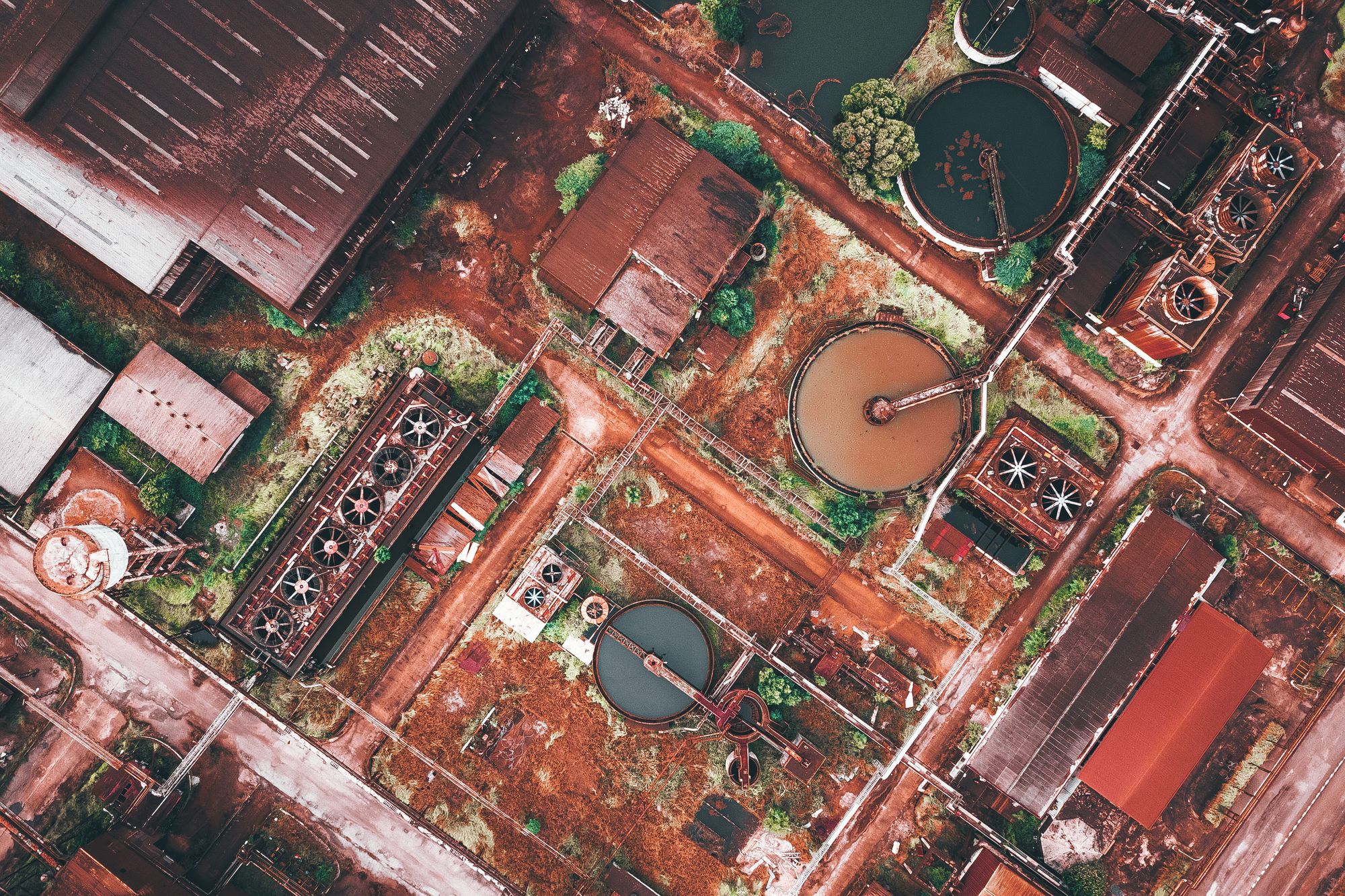
From the air, the Tema industrial area and the free zone enclave read as a field of very large rectangles. Warehousing, light manufacturing, cold chain, packaging, logistics. Roof plates of five, ten, twenty thousand square metres each, mostly profiled metal sheet, mostly with translucent skylight banks running in strips, mostly untouched since practical completion.
Ask a plant manager what the roof cost to build and there is an answer. Ask what it costs to maintain and there usually is not one, because it has not been maintained. Not through negligence, but because access to it is a permit exercise that nobody wants to open.
Why nobody goes up there
Walking a large industrial roof in Ghana means confronting several things at once. Profiled sheet and older composite panel are fragile in the spans between purlins. Skylight panels degrade with UV and will not reliably take a person's weight after a few years, which is the single most common cause of serious falls on roofs anywhere in the world. Edge protection is often absent. And on a hot afternoon, the surface temperature makes work unpleasant and judgement worse.
So the honest reason most Tema roofs are dirty is not cost. It is that the access conversation is difficult enough that it never gets started, and the roof falls off the maintenance schedule entirely.
What that actually costs
Three costs accumulate quietly. The first is corrosion. Dust and biological growth hold moisture against coatings, fixings and laps. In a coastal industrial setting with salt in the air, that is exactly the condition under which coated steel starts to go. The damage begins in the places you cannot see from the ground.
The second is drainage. Valleys, gutters and outlets fill with a mixture of dust, vegetation and windblown material. Water then sits where the structure was never designed to hold it, or finds a path into the building. Most roof leaks reported inside a Tema warehouse start as a blocked valley that nobody inspected.
The third is lighting load. Skylight banks are specified to reduce daytime lighting demand across a large floor plate. Once they are heavily soiled, that benefit disappears and artificial lighting runs through the day on a plate of several thousand square metres. On a large site with tariffs where they are, that is not a rounding error.
A roof that has never been cleaned has also never been inspected, because nobody has been close enough to see it.
Cleaning as the cheapest survey you will run
The argument that lands with plant managers is rarely the appearance one. It is that cleaning the roof is the only affordable way to find out what condition it is in. Once the surface is clear, coating breakdown, corrosion at fixings, damaged laps, cracked skylight panels and standing water are all visible and photographable.
That turns an unscheduled expense into a planning input. You come away knowing which roof planes need attention this year, which can wait, and whether the drainage regime is coping. That is a defensible basis for a capital request, which the previous position — nobody has been up there — is not.
Scheduling around production
The other objection is downtime, and here the free zone's operating pattern helps. Flying the roof does not require a shutdown, edge protection, scaffold, or a permit to work at height for a cleaning crew. It requires an exclusion zone on the ground beneath the flight path, coordination with vehicle movements in the yard, and agreement on which shifts to work around.
For most sites that means the line keeps running. For sites with genuinely continuous processes, it means working the roof plane by plane around the yard's rhythm rather than stopping anything.
A reasonable first step
If you run a site in the Tema industrial area or the free zone, the useful first move is not a quotation. It is a survey pass over the roof to establish what is actually up there, followed by a decision about frequency based on what the imagery shows. Most sites we assess need less intervention than they fear and more than they have been doing, which is nothing.
Want this applied to your asset?
A site assessment turns everything above into numbers for your building or plant. It is free and it takes one visit.
More insights
What Harmattan dust actually costs a Ghanaian solar plant
Soiling is the most predictable loss on a solar asset in West Africa, and the only one you can fully recover in an afternoon.
Rope access versus drone: where the risk actually sits
Most of the cost and nearly all of the danger in high-access cleaning belongs to access, not to cleaning.
What Ghana's drone rules mean for work on your site
A short guide for facility managers and procurement teams on what to ask a UAV contractor before they mobilise.
Salt, Harmattan and the sea breeze: how coastal Accra ages a façade
Four separate loads hit a building in Greater Accra, and each one damages a different part of the elevation.
Not one problem, four
Exterior soiling gets discussed as a single thing — the building is dirty. On the Ghanaian coast it is more useful to separate it into four loads, because they arrive on different schedules, attack different components, and respond to different cleaning intervals.
Salt
The sea breeze carries salt aerosol inland across Greater Accra every day. How far it reaches depends on wind, topography and what is in the way, but buildings within a few kilometres of the shoreline take a measurable load, and beachfront hospitality takes a heavy one.
Salt matters because it is hygroscopic: it pulls moisture out of humid air and holds it against whatever it is sitting on. On glass that means a persistent film. On aluminium capping, fixings and gasket lines it means a wet, chloride-rich micro-environment, which is the classic condition for pitting and for accelerated failure of anodised and powder-coated finishes.
What it argues for
Frequency, and rinsing rather than aggressive treatment. Salt is highly soluble, so it comes off readily with a clean water wash. The damage comes from leaving it in place through a long dry period, not from the difficulty of removing it.
Harmattan dust
From roughly December to February the Harmattan brings fine mineral dust south. The particle size is the problem: it is fine enough to form an even veil across a surface rather than settling in visible patches, and fine enough to work into gasket lines, drainage channels and the head of window openings.
On glass it is an optical loss and a cosmetic one. On solar it is a direct yield loss. In drainage channels it combines with the first rains into a paste that blocks weep holes, which is a much more expensive problem than a dirty pane.
Traffic film
Buildings on the arterial roads and around the major interchanges take exhaust particulates and brake dust. This load is oily, and that changes the chemistry: it binds the dust and salt already present into a film that resists a plain rinse and needs the mechanical action of water at the right pressure to lift.
It is also directional. The elevation facing the road takes almost all of it, which is why one face of a building often looks years older than the others.
Biological growth
In the wet season, humidity and shade let algae and mould establish on render, stone, ACM joints and the north-facing elevations that never dry properly. Growth holds water against the substrate, stains porous surfaces, and on some finishes will etch permanently if left across multiple seasons.
Each load has a season. A cleaning cycle set against the calendar rather than the exposure profile will always be in the wrong place at the wrong time.
Reading your own building
You can usually diagnose the dominant load by looking at which elevation is worst. If the sea-facing face is worst, salt dominates and you need frequency. If the road-facing face is worst, traffic film dominates and you need pressure and technique. If the shaded face is worst, growth dominates and you may need targeted chemistry. If all faces are equally flat and grey, dust dominates and you are looking at a Harmattan cycle.
Most Accra buildings show two of these at once, and the mix tells you where the money should go first.
What a sensible year looks like
For a typical coastal commercial building, a defensible cycle is a pass after Harmattan clears — which recovers the appearance and clears the dust out of drainage before the rains — and a second pass on the exposed elevations later in the year. Beachfront hospitality and anything within sight of the water usually needs more.
The specific answer belongs to the specific building. But the framing is transferable: stop asking how often the building should be cleaned, and start asking which load is doing the damage and when it arrives.
Want this applied to your asset?
A site assessment turns everything above into numbers for your building or plant. It is free and it takes one visit.
More insights
What Harmattan dust actually costs a Ghanaian solar plant
Soiling is the most predictable loss on a solar asset in West Africa, and the only one you can fully recover in an afternoon.
Rope access versus drone: where the risk actually sits
Most of the cost and nearly all of the danger in high-access cleaning belongs to access, not to cleaning.
What Ghana's drone rules mean for work on your site
A short guide for facility managers and procurement teams on what to ask a UAV contractor before they mobilise.
Cleaning a hotel elevation without losing a night's occupancy
Guests review the exterior before they ever see the room. The problem has always been doing something about it while they are in it.
The exterior is the first review
Hospitality is the sector where building appearance converts most directly into revenue. A guest forms an opinion in the approach from the road, photographs the building, and — increasingly — that photograph ends up attached to a review. The elevation is doing marketing work whether or not anyone has budgeted for it.
This is sharper on the Ghanaian coast than in most markets, because beachfront and near-beach properties take the heaviest salt load in the country. A hotel two hundred metres from the water ages visibly faster than the same building would inland, and it does so on the face that everyone photographs.
Why it does not get cleaned
General managers know all of this. The obstacle has never been the argument, it has been the intervention. Conventional high-access cleaning at a hotel means a scaffold going up across the frontage, or a cradle running past guest room windows, or rope technicians working above the pool terrace and the arrival court.
Each of those has a real occupancy cost. Rooms on the affected elevation become hard to sell. Terrace and pool areas lose their setting or close. The arrival experience runs past a hoarding. Events cannot be sold into the affected weeks. So the work slides to the low season, and then to the following low season, and the building keeps ageing on the face that matters most.
The cleaning was never the disruption. The access was.
What changes when the work is flown
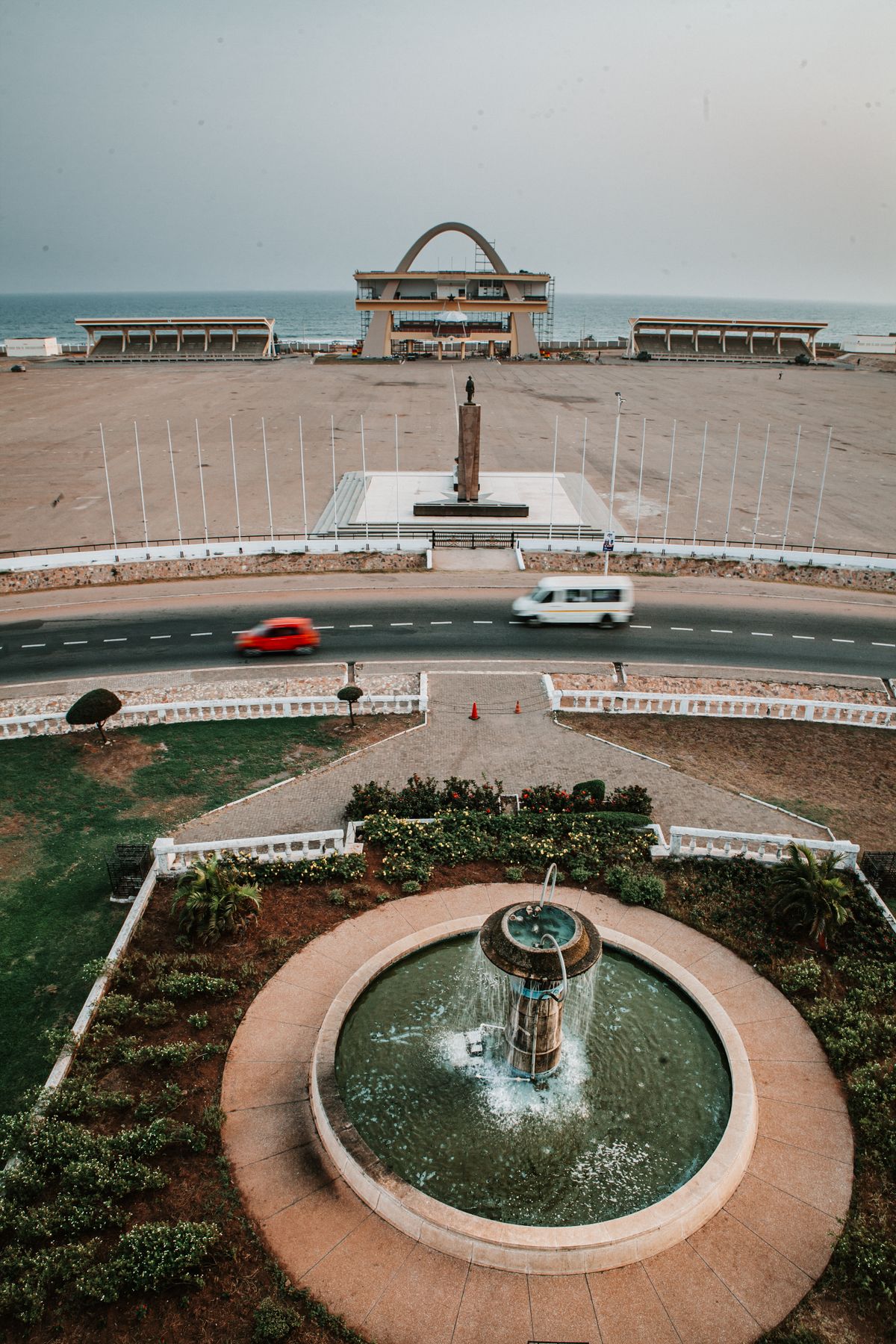
Removing scaffold and cradle from the equation changes the scheduling problem rather than solving the cleaning problem, and for a hotel that is exactly the right change. There is nothing standing on the frontage for weeks. There is no cradle passing guest windows. The arrival court and the terrace are affected only for the period the exclusion zone is actually live beneath the flight path.
In practice that means an elevation can often be worked in early morning sessions before the terrace fills, elevation by elevation, with the exclusion zone moving as the work moves. Rooms are not taken out of inventory. The pool does not close for the season.
What the property needs to prepare
Three things make the difference between a smooth mobilisation and a difficult one. First, a decision about window openings and balcony doors on the working elevation for the session — guests need notice, and housekeeping needs a checklist. Second, air intakes and any external kitchen extract identified in advance. Third, agreement on the ground area: which part of the terrace, car park or arrival court sits under the flight path, and who manages it.
None of that is unusual for a hotel operations team. It is a smaller ask than the pre-mobilisation meeting for a scaffold.
Cycles, not projects
The properties that stay ahead of the salt do not commission a big clean every few years. They run a cycle, usually weighted toward the sea-facing and road-facing elevations, timed around their own occupancy pattern rather than a contractor's calendar.
That converts a lumpy capital-feeling expense into a predictable operating line, and it means the building is never in the state where a full rescue job is required. For a property whose exterior is part of the product, that is the whole argument.
Want this applied to your asset?
A site assessment turns everything above into numbers for your building or plant. It is free and it takes one visit.
More insights
What Harmattan dust actually costs a Ghanaian solar plant
Soiling is the most predictable loss on a solar asset in West Africa, and the only one you can fully recover in an afternoon.
Rope access versus drone: where the risk actually sits
Most of the cost and nearly all of the danger in high-access cleaning belongs to access, not to cleaning.
What Ghana's drone rules mean for work on your site
A short guide for facility managers and procurement teams on what to ask a UAV contractor before they mobilise.
The things procurement teams ask before they sign.
If your question is not here, ask it directly. We would rather answer it now than in a tender clarification.
The site assessment answers what a web page cannot
Elevation complexity, airspace, water access, public exposure and occupancy all shift the answer. One visit settles them, and it costs you nothing.
Still deciding?
Send the asset details and we will tell you plainly whether flying is the right method for it. If it is not, we will say so.
A new category of work, staffed from Ghana.
Drone-powered high-access cleaning did not exist here as a job description three years ago. We are building the team that defines it — pilots, ground technicians, coordinators and commercial people.
Where we are hiring
Remote pilot in command
You hold or are working towards a GCAA remote pilot licence and want to fly commercial missions rather than events. You will command wash and survey flights, own the flight plan, and sign the log.
Ground operations technician
You run the ground side: water treatment and supply, exclusion zones, equipment prep, and spotting for the pilot. Attention to a checklist matters more than experience with drones.
Operations coordinator
You turn a signed job into a scheduled flight: permissions, site liaison, crew and equipment logistics, and the reporting that goes back to the client.
Business development manager
You know facility managers, property groups and industrial procurement in Ghana, and you can hold a technical conversation about access risk and maintenance budgets.
Flying commercially is not the same as flying
A wash mission is a planned, permitted, logged operation with a ground crew, an exclusion zone and hard abort criteria. If that sounds like discipline rather than fun, you will fit here.
Send us something short and specific
Tell us which role, what you have done, and one thing you would want to change about how high-access work is done in Ghana.
Tell us what the asset is. We will tell you if we can fly it.
The fastest route is a site assessment. Send the details and we come back within one business day. The assessment and proposal are free.
Reach the operations desk
Spintex, Accra
Ghana
Prefer we come to you?
Send the asset details and we will arrange a site assessment at a time that suits the building. It is free, and it settles most questions in one visit.
Three short steps, then a site assessment.
We do not price a high-access job from a web form, and you should be wary of anyone who does. This tells us enough to bring the right platform to the right assessment.
A site assessment, then a proposal you can put in a budget
We visit, measure the elevation or array, check airspace and water access, and come back with a scope and a figure. Both are free, and neither commits you to anything.
Privacy notice
What we collect when you use this site, why we hold it, and how to have it removed.
What we collect
When you submit a quote request, contact message or job application, we collect the details you enter: name, organisation, role, email, phone, and the information you give about the asset or your experience.
We do not run advertising trackers or sell data to third parties.
Why we hold it
To respond to your enquiry, prepare a site assessment and proposal, and maintain a record of the work we have quoted or carried out for you. Job applications are held to assess your application and, if you agree, to consider you for future roles.
How it is stored
Submissions are transmitted to our operations desk. Where a submission cannot be transmitted immediately, it is held temporarily in your own browser storage on the device you used, so nothing is lost, and cleared once transmitted.
Operational records relating to work carried out on your site — flight logs, method statements, condition imagery — are retained for the period required for insurance and asset records.
Your choices
You can ask us what we hold about you, ask for it to be corrected, or ask for it to be deleted. Email the address on the contact page and we will action it. Deletion requests covering active project records may be limited by insurance and legal retention obligations, and we will tell you if that applies.
Cookies
This site does not set advertising or profiling cookies. Local browser storage is used only to hold your own unsent submissions and interface state on your device.
Changes
If this notice changes, the updated version replaces this one on this page. Material changes affecting existing clients are communicated directly.
Terms of use
The basis on which this website is provided. Service contracts are separate and are issued with each engagement.
This website
The content here is provided for general information about our services. It does not constitute a quotation, a technical specification, or advice on your specific asset. Work is scoped and priced after a site assessment and governed by the contract issued for that engagement.
Estimator and calculator tools
The programme estimator and soiling calculator produce indicative planning figures from the inputs provided. They use simplifying assumptions, do not model site-specific constraints, and must not be relied on as a quotation, an engineering assessment or a financial forecast. Where a decision depends on the numbers, ask us for a site assessment.
Availability
We aim to keep this site available and accurate but do not warrant uninterrupted availability or that every detail is current. Service descriptions, coverage and capability may change.
Regulatory statements
Statements about aviation permissions describe our operating practice. The permissions applicable to any specific site are confirmed during scoping for that site, and the documentation is provided before mobilisation.
Intellectual property
The content, layout, brand marks and imagery on this site belong to SkyClean Africa or are used with permission. Reproduction for commercial purposes requires written consent.
Governing law
These terms and any dispute arising from use of this website are governed by the laws of the Republic of Ghana.
Submissions captured on this device.
An internal view of the lead pipeline. When a transmission endpoint is configured, submissions post to it and this list acts as the local record. When it is not, this is the record, and every submission also offers a prefilled email fallback.
| Reference | Type | From | Received | Status |
|---|
To transmit submissions to a CRM, form service or inbox, set endpoint in the CONFIG block at the top of the script. Submissions are posted as JSON. Everything else on this page keeps working unchanged.
That page is not on the flight plan.
The link may be old, or the address slightly off. Everything on this site is reachable from the navigation, or search with the button in the header.